
It was late on a Tuesday night. I was deep inside Ahrefs, pulling up the backlink profiles of two websites competing for the same keyword. Both had similar domain ratings. Both had decent content. But one was sitting at position one in Google and had been there for months. The other was stuck at position eleven, despite a stronger backlink count.
I kept staring at the data trying to figure out what I was missing. And then it hit me. The website ranking at the top was being cited inside AI Overviews. It was referenced in featured snippets. Its author had a Knowledge Panel. The site had entity coverage across dozens of related topics. The one stuck at eleven? None of that.
That night changed how I think about SEO entirely.
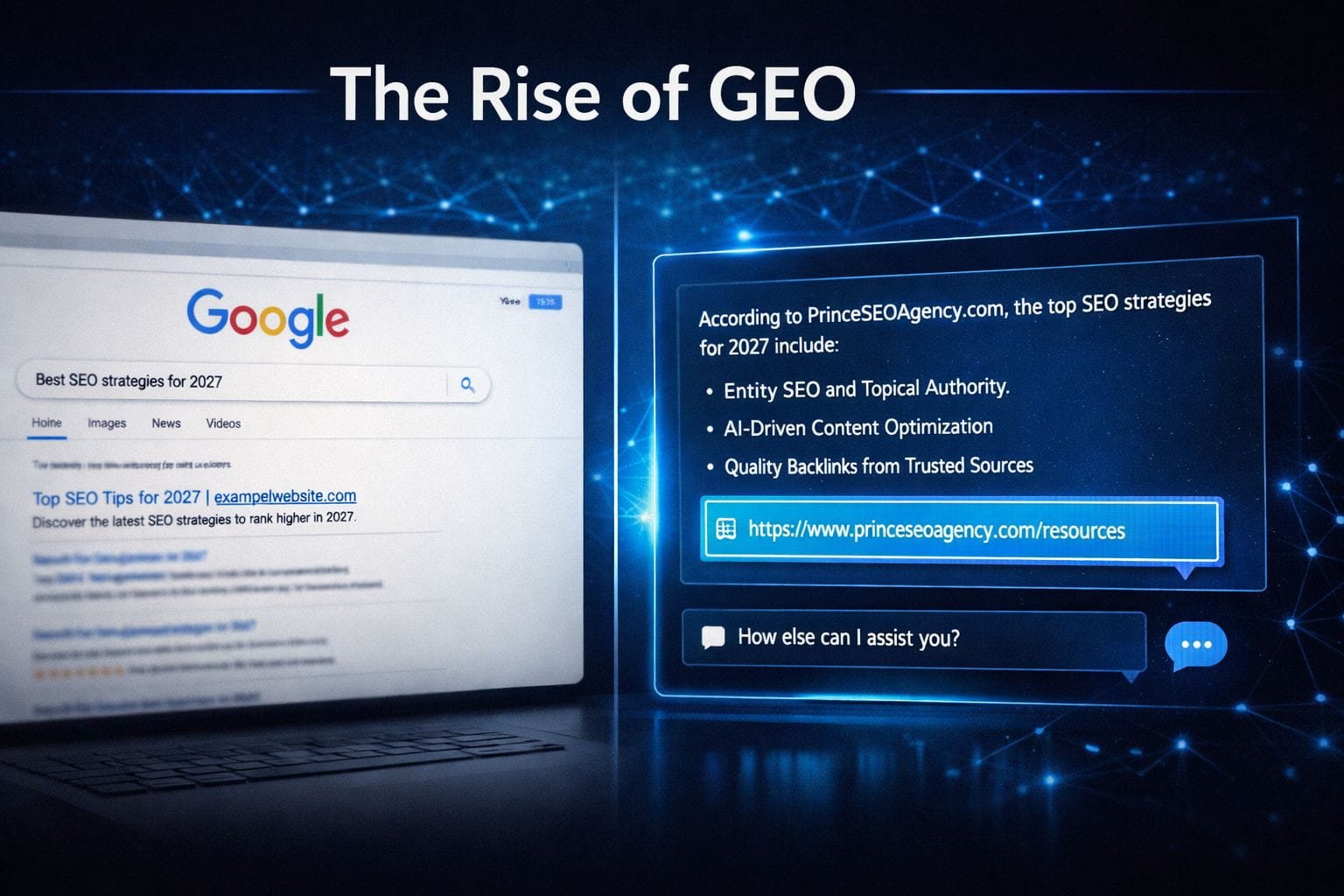
We are no longer optimising pages for a ten-link list on a blue screen. We are optimising for an AI that reads, reasons, and recommends. That shift is not coming in 2027 it is already here.
Over the past year at Prince SEO Agency, I have been studying how AI search is reshaping what Google rewards. And in this article, I want to share what I have learned not from a whitepaper, but from real SERP observations, backlink analysis, and ranking experiments
Table of Contents
How AI Is Changing the Way Google Understands Content
Google is not just a keyword matcher anymore. It is an entity-aware, context-driven machine that reads content the way a smart human would looking for meaning, depth, credibility, and relevance.
The introduction of AI Overviews changed the game. Google now synthesises answers from multiple sources and presents them at the top of the page. If your content is not part of that synthesis, you are invisible to a large portion of searchers.
Tools like Semrush and Ahrefs track keyword rankings, but they do not tell you how well your content integrates into the AI layer of search. That gap is what most SEOs are missing right now.
What is happening under the hood is a shift from keyword relevance to semantic understanding. Google’s systems, built on models like MUM and Gemini, are reading your content the way a senior researcher would checking whether your article demonstrates real expertise, whether it connects to trusted entities, and whether the information can be verified against what the web collectively believes to be true.

The New Ranking Signals Emerging in the AI Search Era
The signals that Google and AI engines are evaluating have evolved. Here is what I am seeing actually matter in 2026 and heading into 2027.
Authority Signals
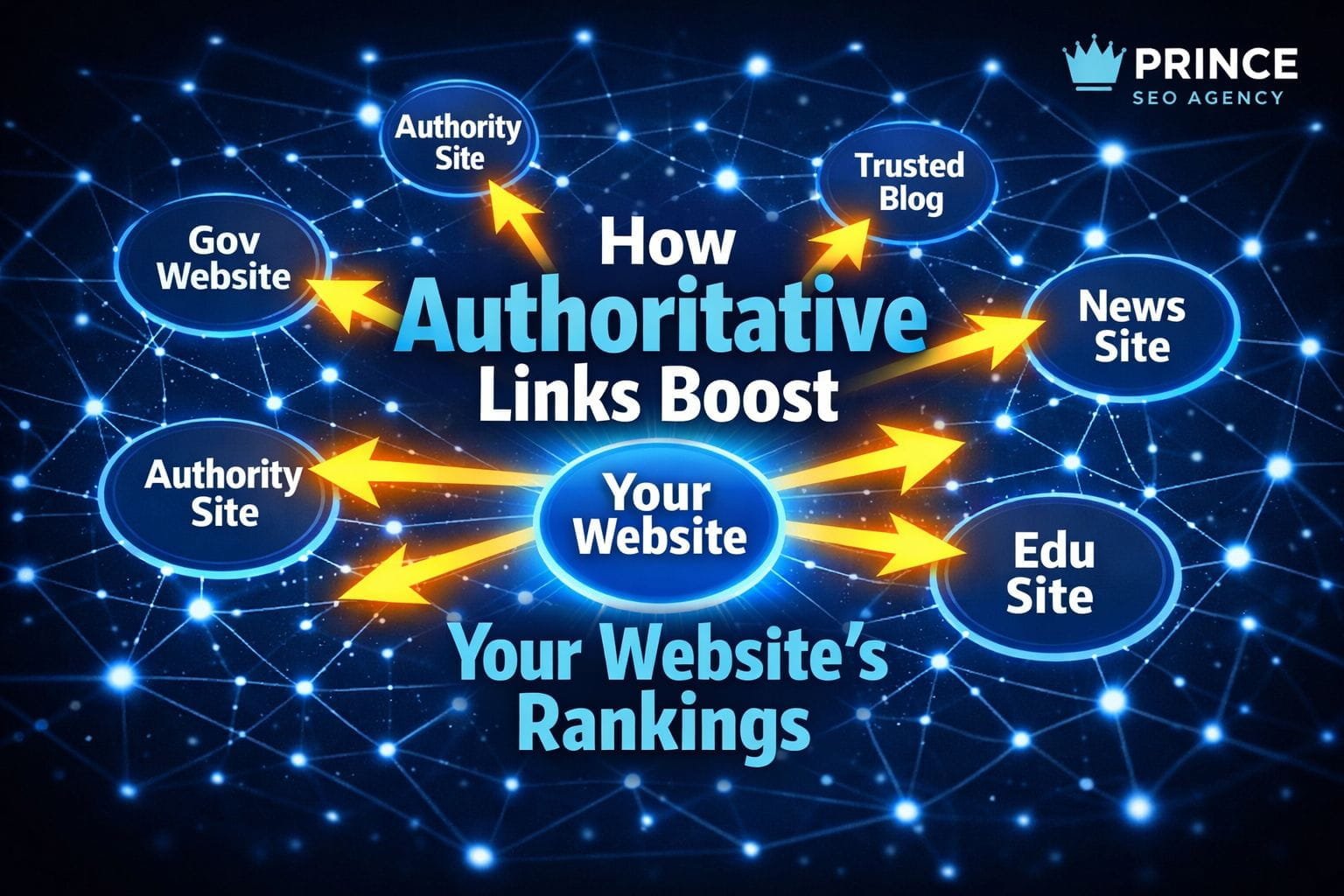
Authority is no longer just about how many links you have. It is about whether trusted publications, databases, and AI systems recognise your brand, your author, and your content as legitimate sources. Named entities meaning your real name, your business name, your author profile now carry SEO weight that was not measurable two years ago.
Entity SEO
Entity SEO is about making sure Google understands who you are, what you do, and how you relate to other recognised entities in your niche. If your website is about SEO and none of the major SEO databases or publications mention your brand, you are essentially invisible to the entity graph. Being cited by Search Engine Journal, Moz, or Backlinko is not just a vanity metric it signals entity legitimacy.
Content Credibility
Credibility signals have become structural. Google looks for first-person experience, original data, verifiable claims, and author attribution with credentials. A generic 2,000-word article written without a clear author and without any original insight is being deprioritised in favour of content that demonstrates real experience. This is what E-E-A-T means in practice.
User Engagement Signals
Bounce rate, dwell time, scroll depth, and return visits are feeding into ranking models in ways that are hard to measure but very real. Content that genuinely helps users stay, explore, and return earns an implicit ranking signal that no amount of keyword stuffing can replicate.
What I Learned After Studying Ranking Websites
I spent three months analysing the top-ranking pages in the SEO, digital marketing, and local business niches across Indian and global SERPs. Here is what stood out consistently.
- Pages that ranked in AI Overviews had clear, structured definitions near the top of the article
- Ranked pages referenced multiple entities naturally tools, people, brands not just target keywords
- Almost every top-ranking page had a named author with an active presence on LinkedIn or a dedicated author bio page
- The best-performing pages covered subtopics deeply rather than staying surface-level across too many ideas
- Backlink profiles of top pages were not necessarily massive but the linking domains were highly relevant and authoritative
One pattern surprised me. A relatively new website in the content marketing niche was outranking sites with five times more backlinks. When I dug into why, the answer was clear it had entity coverage. Its founder had bylines in three industry publications. The brand was mentioned in Semrush’s blog. It was appearing in AI-generated answers. The links were fewer but the entity signals were stronger.
Ranking in 2027 will not be about who has the most links. It will be about who has the most trusted presence across the AI-readable web.
Why Backlinks Still Matter Even in AI Search

I want to be clear about something because I see a lot of confusion around this: backlinks are not dead. They are evolving.
In the AI search era, a backlink is not just a vote it is a citation. And citations in academic literature work the same way they do in Google’s understanding of trust. When Ahrefs or Moz links to a piece of content, they are not just passing PageRank. They are signalling to Google that this content belongs in a trusted conversation.
What has changed is the quality threshold. A hundred low-quality directory links will do almost nothing. A single citation from a respected industry publication can move the needle in ways that were not measurable before AI search became dominant.
I have seen this pattern repeatedly in client work at Prince SEO Agency. A healthcare client in Ludhiana was stuck on page three for their main service keyword. We secured four contextual mentions in health publication round-up articles not traditional backlinks, just entity mentions. Within six weeks, rankings moved significantly.
The lesson is this: build links that are citations, not just connections. Think about who would reference your content in an authoritative article and make your content worth referencing.
The SEO Mistakes Many Websites Will Make in the AI Era
After working with clients across India and studying competitor strategies, I keep seeing the same mistakes. These will become increasingly costly in 2027.
- Targeting keywords without building topical authority. Ranking for one keyword while ignoring the full topic cluster leaves you vulnerable to being replaced by a competitor who covers the subject more completely.
- Writing for humans but ignoring entity structure. Content that reads well but lacks proper schema markup, named authors, and entity linkage will struggle to enter AI Overviews regardless of quality.
- Chasing backlinks without considering relevance. Domain rating matters far less than domain relevance in today’s environment. A link from a fishing blog to an SEO website is almost meaningless.
- Ignoring brand search and entity development. If nobody searches your brand name, if you have no Knowledge Panel, if AI systems cannot verify who you are — you are operating at a severe trust deficit.
- Publishing content without demonstrating experience. Generic explainer articles with no original data, no case studies, and no first-person perspective are being filtered out of AI synthesis layers.
Prince SEO Agency Framework for Ranking in the AI Search Era
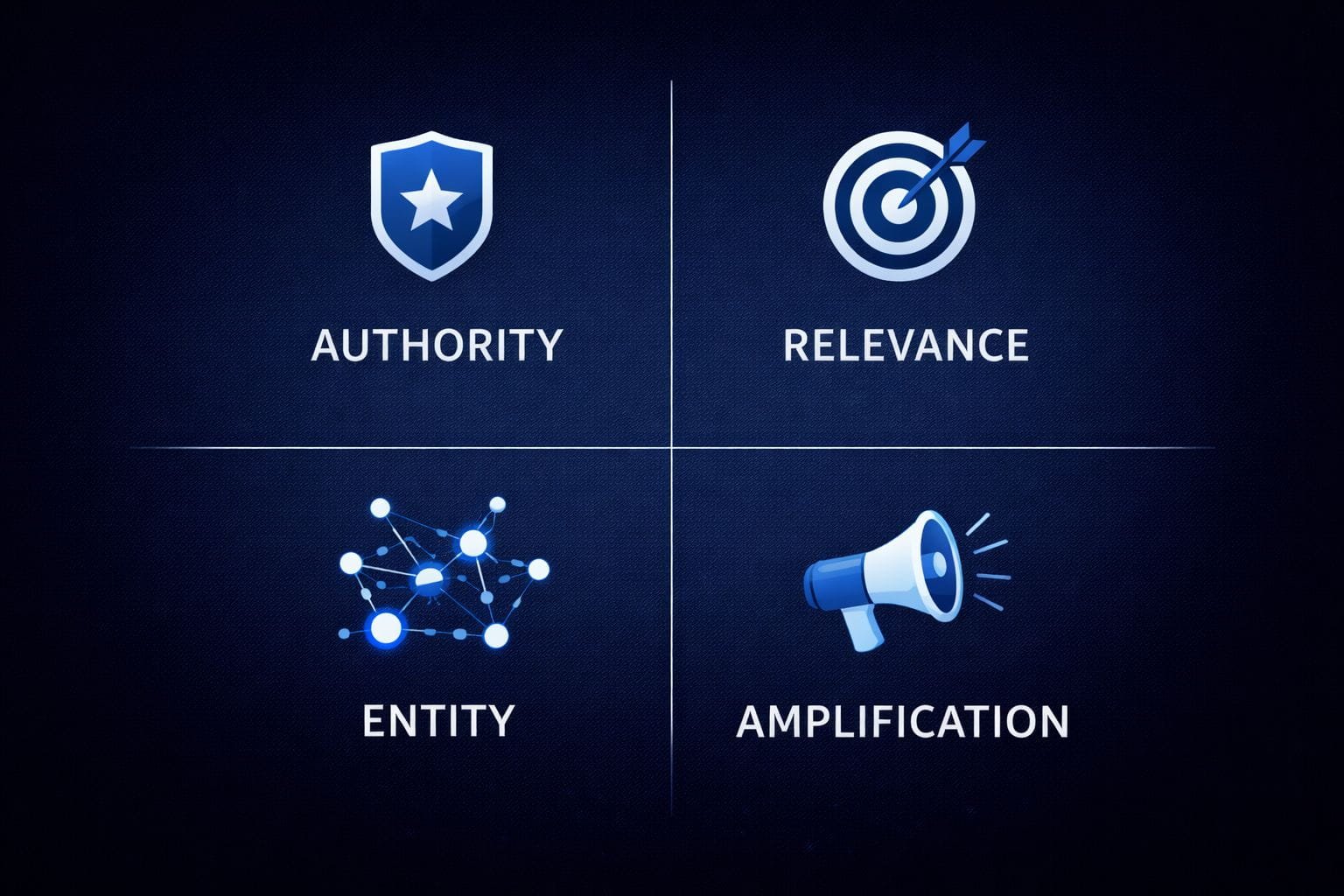
At Prince SEO Agency, we have developed what we call the AREA Framework Authority, Relevance, Entity, and Amplification for building durable rankings in the AI search environment.
Authority
Build genuine author authority through bylines, speaking mentions, and being cited in industry publications. This is not about fake press releases it is about creating content and insights that others reference naturally.
Relevance
Map out full topic clusters before writing a single article. Every piece of content should serve a clear role in covering a topic more completely than any competitor page.
Entity
Ensure your brand, your founder, your services, and your location are all clearly structured across your website with proper schema markup. Build connections between your brand and recognised entities in your niche.
Amplification
Distribute your content through channels where AI systems discover and index content LinkedIn articles, industry newsletters, podcast mentions, and strategic digital PR. Amplification in the AI era is about being cited, not just seen.
Practical SEO Strategies That Will Still Work in 2027
Not everything is changing. Some fundamentals are becoming more important, not less. Here is what I recommend implementing now.
- Build a content hub strategy around two or three primary topic clusters and own them deeply
- Create author pages with credentials, photos, and links to external publications
- Add FAQ schema, HowTo schema, and Article schema to every piece of content
- Write definitions and structured summaries at the top of articles to target AI Overviews
- Pursue digital PR and entity mentions actively, not just traditional link building
- Monitor your brand in AI-generated answers using tools like Perplexity, ChatGPT Search, and Google AI Overviews directly
- Build internal linking structures that mirror the semantic relationships between your topics
- Localise entity signals especially for businesses serving specific regions like Ludhiana or Punjab — through NAP consistency, local citations, and regional publications
Implementation Checklist for Future-Proof SEO
Site Foundation
- Audit and fix all technical SEO issues — Core Web Vitals, crawlability, mobile rendering
- Set up structured schema markup: Article, Person, Organization, LocalBusiness
- Create a dedicated author bio page with credentials and external links
Content Strategy
- Map your primary topic clusters and identify content gaps
- Write at least one definitive pillar piece per topic cluster (3,000+ words with original data)
- Add a structured FAQ section to every key article targeting AI Overviews
- Include first-person experience and case study references in all major articles
Authority & Entity Building
- Pursue three to five byline opportunities in industry publications per quarter
- Submit your brand and founder to relevant entity databases and directories
- Build citations in regional and industry-specific directories with consistent NAP
- Monitor AI Overview appearances and adjust content structure where you are missing
Link Building
- Focus on contextual backlinks from topically relevant domains
- Create original data studies, frameworks, or tools that attract natural citations
- Run digital PR campaigns targeting journalists and publication editors in your niche
Frequently Asked Questions
Will SEO disappear because of AI?
No. SEO is evolving, not disappearing. AI search still relies on indexed web content to generate answers. The skills required are shifting entity building, topical authority, and content credibility matter more but the fundamental work of helping websites rank remains essential.
Will backlinks still matter in 2027?
Yes, but quality and relevance matter far more than quantity. A citation from a respected industry publication carries significantly more weight than dozens of low-quality directory links. Think of backlinks as citations rather than votes.
What is Generative Engine Optimization (GEO)?
GEO is the practice of optimising content to appear inside AI-generated answers — in tools like Google AI Overviews, Perplexity, and ChatGPT Search. It focuses on structure, entity clarity, credibility signals, and being cited by trusted sources.
How do AI Overviews affect website traffic?
AI Overviews can reduce click-through rates for informational queries since users get answers directly on the results page. However, being cited inside an AI Overview builds brand authority and drives higher-intent clicks from users who want to go deeper.
What is Entity SEO and why does it matter?
Entity SEO is about making sure Google understands your brand, your people, and your topics as distinct, verifiable entities in its knowledge graph. Strong entity signals improve your chances of appearing in AI Overviews, Knowledge Panels, and featured snippets.
What content formats will perform best in 2027?
Comprehensive pillar articles with original data, structured FAQs, case studies with first-person experience, and comparison content with clear frameworks will perform best. Thin, generic content will continue to decline.
How can small SEO agencies compete in the AI search era?
By specialising deeply. Owning a specific niche like AI SEO, local SEO for healthcare, or e-commerce SEO for a specific market and building genuine topical authority in that niche is more sustainable than competing broadly against larger agencies.
How can small SEO agencies compete in the AI search era?
By specialising deeply. Owning a specific niche like AI SEO, local SEO for healthcare, or e-commerce SEO for a specific market and building genuine topical authority in that niche is more sustainable than competing broadly against larger agencies.
What role does author authority play in rankings?
Author authority is becoming a direct ranking signal. Google uses author entity data, external bylines, and linked credentials to evaluate content credibility. Named authors with verifiable expertise consistently outperform anonymous content.
Is local SEO affected by AI search?
Yes. AI search systems are increasingly integrating local intent signals. Local businesses need consistent entity data across directories, strong Google Business Profile optimisation, and regional publication mentions to compete in AI-driven local results.
What tools should SEOs use to track AI Overview performance?
Manually check Google AI Overviews for your target keywords. Use Semrush’s AI Overview tracking features, monitor Perplexity and ChatGPT Search for brand mentions, and track branded search volume as a proxy for entity recognition growth.
How long does it take to see results from entity-focused SEO?
Entity SEO typically takes three to six months to show measurable results. Building Knowledge Panel eligibility, securing industry bylines, and earning AI Overview citations all compound over time rather than delivering instant ranking changes.
What is the biggest SEO mistake to avoid going into 2027?
Publishing high volumes of thin, AI-generated content without original perspective, credibility signals, or entity structure. Google is actively filtering generic content from AI synthesis layers. Quality, experience, and entity depth are the competitive advantages that will matter most.
Trusted Resources
The following references provide additional depth and trusted insights on the topics covered in this article.
Google Search Central
Learn how Google evaluates helpful content quality and search ranking signals.
Visit Resource →Ahrefs Blog
Industry insights covering link building strategies and SEO in the AI era.
Visit Resource →Semrush Blog
Guides explaining E-E-A-T, content quality signals and modern SEO frameworks.
Visit Resource →Moz Beginner’s Guide
A comprehensive learning resource covering SEO fundamentals and entity SEO.
Visit Resource →Backlinko Study
Large scale research analyzing Google ranking factors and link authority signals.
Visit Resource →Search Engine Journal
Expert insights covering AI search developments and future SEO strategies.
Visit Resource →Continue Reading Prince SEO Agency
Explore related articles from Prince SEO Agency to build on what you have learned here.
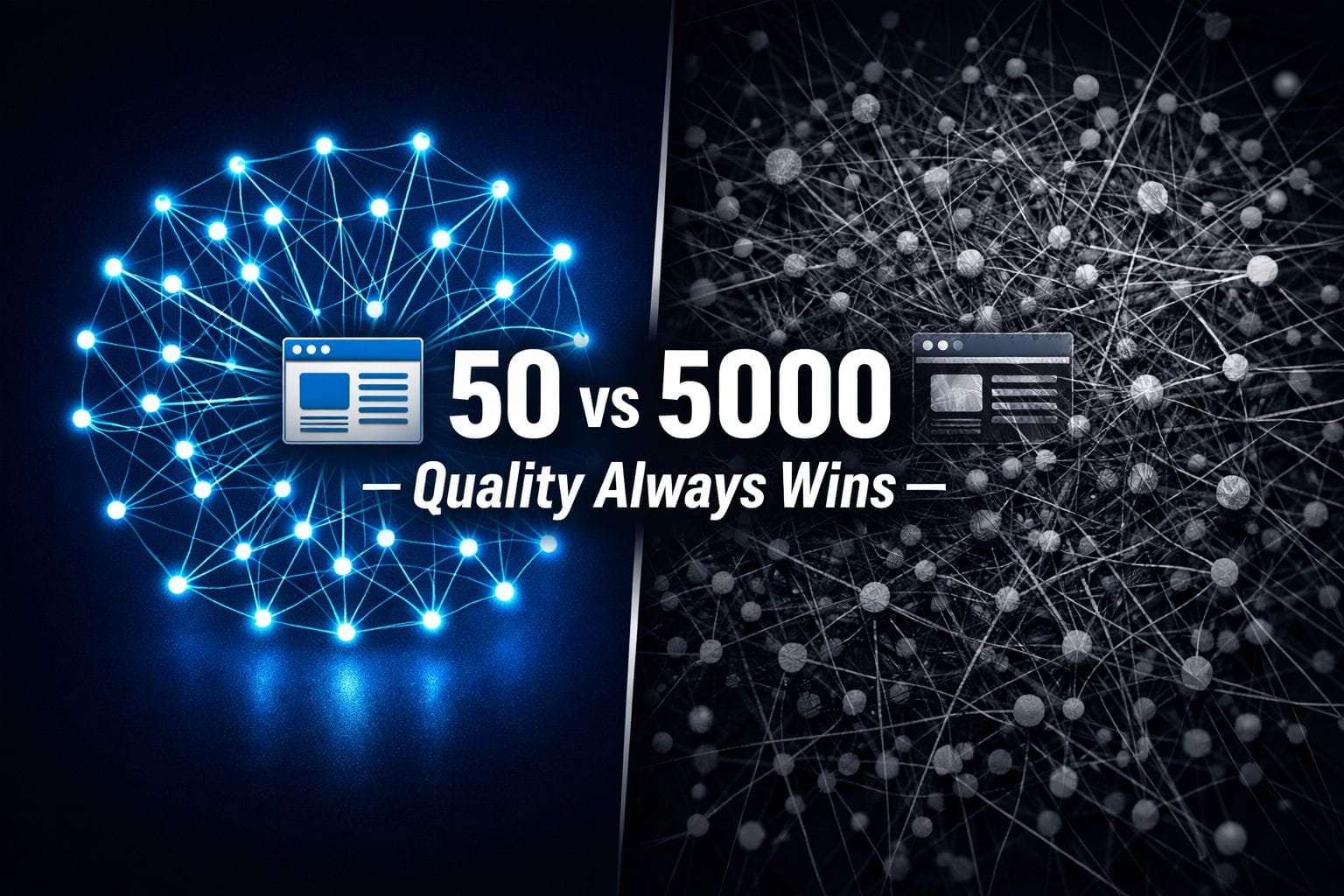
Why 50 Backlinks Can Beat 5000 — What I Learned After Studying Real SEO Data
Real SEO insights on how link quality often outperforms massive backlink quantity.
Read Article →What Is Link Building in SEO?
A clear guide explaining how link building helps search engines measure authority.
Read Article →What Are Backlinks and Why They Matter for SEO Rankings
Learn why backlinks remain one of the strongest ranking signals in modern SEO.
Read Article →