
Introduction The Question That Changed Everything
I still remember the exact moment link building stopped being a theory for me and became a living, breathing strategy.
A client called me in early 2024 with a simple but frustrating question: ‘Prince, I have written 40 articles in six months. My content is genuinely better than my competitors. So why am I still stuck on page three?’
I opened Ahrefs, pulled up the backlink profile of the page ranking at position one, and the answer was right there. That page had 74 referring domains from relevant, authoritative sources. My client’s page had four. Both pieces covered the same topic. Both had solid on-page SEO. But one had trust built around it that Google could verify through the web’s own endorsement system. The other was still waiting to be discovered.
That conversation pushed me to go deeper than I ever had before into the mechanics of backlinks how they work, why they work, how Google evaluates them, and what separates a link that moves rankings from one that does nothing at all.
This article is what I wish existed when I was starting out. It is written specifically for 2026, backed by fresh industry data, and designed to give you a working understanding of link building that goes far beyond the surface level.
Table of Contents
What Is Link Building? The Fundamentals
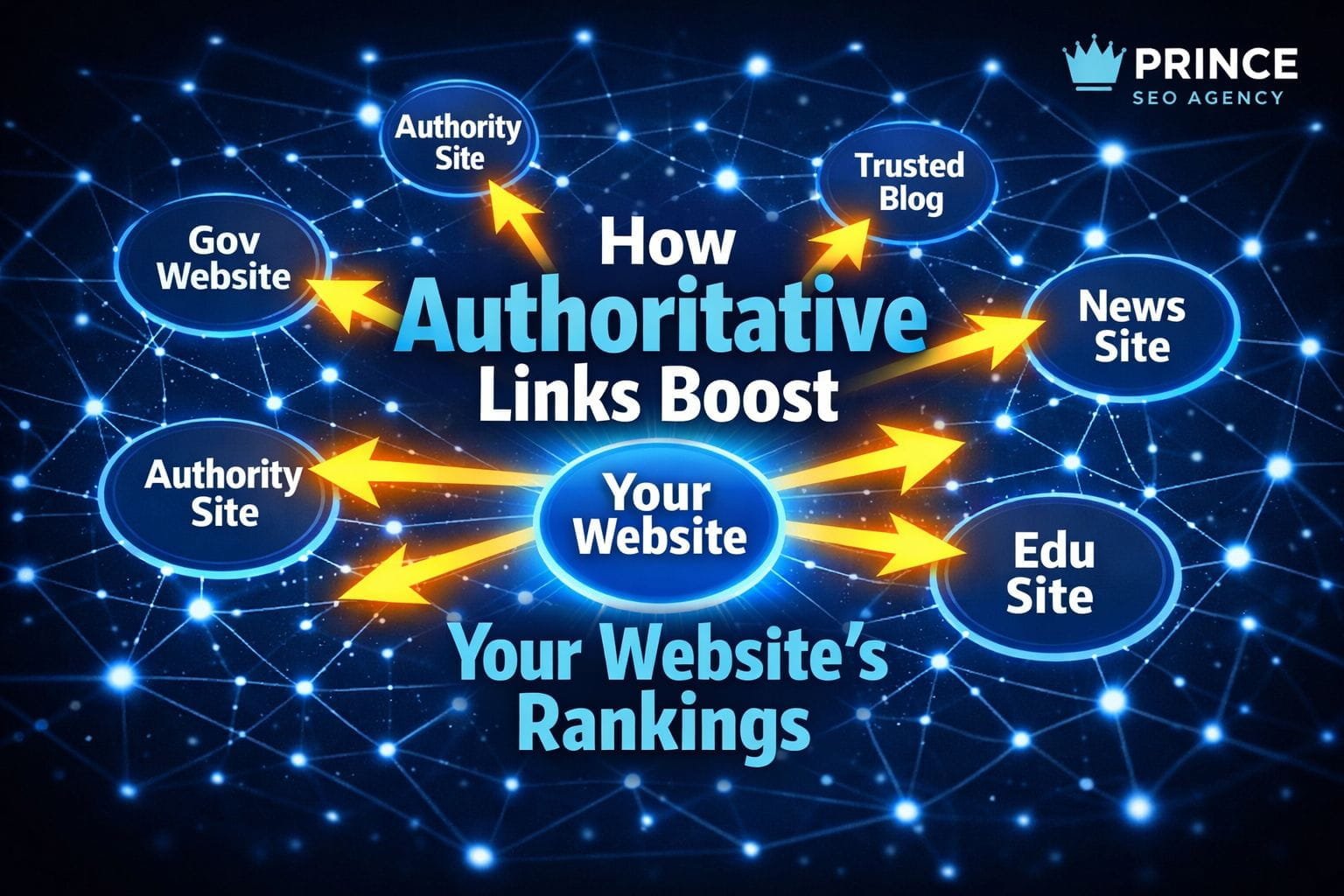
Link building is the process of earning or acquiring hyperlinks from other websites that point back to pages on your own site. These inbound links commonly called backlinks function as endorsements in Google’s ranking system.
The concept originates from the academic world. When researchers write papers, they cite the sources they relied on. The more a paper is cited, the more credible and influential it is considered. Larry Page and Sergey Brin borrowed this logic when building PageRank, the foundational algorithm behind Google Search. They reasoned that if Website A links to Website B, it is effectively saying: ‘This content is worth reading.’ And if many reputable websites say the same thing, Google has strong reason to trust and rank that content.
A backlink is not just a hyperlink. It is a trust signal. It is one website saying to Google: I vouch for this content. The more credible the voice doing the vouching, the more valuable that signal becomes.
How Backlinks Fit Into Google’s Ranking System
Google uses over 200 ranking signals to determine where a page should appear in search results. Among these, three consistently emerge as the most influential: high-quality content, positive page experience, and backlinks.
When Google crawls a link from Domain A to Domain B, it does not just log the connection. It evaluates the quality and context of that link. It considers whether Domain A is reputable, whether the link appears in relevant content, what the anchor text says, and whether the pattern of linking looks organic or manufactured.
Google’s Penguin algorithm update in 2012 marked a watershed moment. It targeted websites that had manipulated their rankings through artificial link schemes, and thousands of sites lost their rankings within days. In 2026, Google’s ability to detect unnatural links has improved dramatically, making genuine link building not just recommended but essential for sustainable rankings.
Dofollow vs Nofollow What Matters in 2026
For years, the SEO world treated nofollow links as completely worthless. That changed in 2019 when Google announced it would treat nofollow as a ‘hint’ rather than a hard directive, meaning nofollow links can and do influence rankings to some degree. In 2026, this shift has fully settled into practice.
A recent survey found that nearly 80% of SEO professionals believe nofollow links affect search rankings. This does not mean you should chase nofollow links exclusively, but it does mean a natural backlink profile — which always includes both types — is healthier than one that only contains dofollow links.
SECTION 03
Why Backlinks Still Matter in 2026 The Data
There is a persistent myth in SEO circles that backlinks are losing relevance as Google places more weight on content quality, user experience, and AI-driven understanding. The data tells a very different story.
94% of link builders say quality matters more than quantity — up from previous years as Google’s filters improve. (PressWhizz, 2026)
95% of all web pages have zero backlinks. Among the top 100 ranking domains, 92.3% have at least one. (Ahrefs data via AIOSEO, 2026)
3.8× more backlinks — the average advantage the #1 Google result holds over pages in positions 2–10. (Backlinko via AIOSEO, 2026)
77.2% more backlinks earned by long-form content (3,000+ words) compared to short-form articles under 1,000 words. (Backlinko, 2026)
97% more backlinks generated by businesses that maintain a blog compared to those without one. (AIOSEO, 2026)
48.6% of SEO professionals rate Digital PR as the most effective link building tactic in 2025–2026. (Editorial.Link survey, 518 respondents)
These numbers consistently point to the same conclusion: link building remains one of the most impactful investments you can make in SEO. The shift is not away from links — it is toward smarter, more selective link acquisition.
What the Budget Data Tells Us
Perhaps the clearest sign that link building still works is how much money serious players invest in it. Agency teams allocate an average of 32.1% of their total SEO budget to link building, while in-house teams allocate 36.03%. In highly competitive niches, the average minimum monthly budget for link building is Rs. 7 lakh or roughly $8,400 per month. High-authority link placements can exceed $1,000 per link.
The market does not lie. If link building was declining in effectiveness, these budgets would be shrinking. Instead, they are growing year over year.
41% of SEO professionals consider link building to be the most difficult aspect of their job. This difficulty is part of what makes it so valuable it creates a natural barrier that protects those who invest in doing it well.
Anatomy of a High-Value Backlink
Not all backlinks are created equal. One link from the right source can do more for your rankings than a hundred links from the wrong ones. Understanding what separates a powerful link from a useless one is fundamental to building an effective strategy.
| Signal | What It Means | Why It Matters |
| Domain Relevance | The linking site covers topics related to your industry | Relevance tells Google the endorsement is meaningful, not random |
| Domain Authority / DR | Ahrefs Domain Rating measures the strength of the linking domain’s backlink profile | 67% of link builders use Ahrefs DR as their primary quality metric (2026) |
| Organic Traffic | The linking page actually receives real visitors from search | High DR with zero traffic often signals a manipulated or inactive domain |
| Link Placement | Where in the content the link appears — body, footer, sidebar, or bio | Body links in editorial content carry significantly more weight |
| Anchor Text | The clickable words of the link | Partial-match anchors are preferred by 41.7% of professionals; over-optimized exact-match can trigger filters |
| Follow Status | Dofollow passes ranking signals; nofollow carries a hint | A natural profile includes both; nearly 80% of SEOs believe nofollow links influence rankings |
| Link Freshness | How recently the linking content was published or updated | Links from active, regularly updated pages tend to pass stronger signals |
| Page-Level Authority | The URL Rating (UR) of the specific linking page | A link from a strong individual page matters even if the domain itself is smaller |
The Anchor Text Question What 2026 Data Shows
Anchor text optimization is one of the most misunderstood areas of link building. The 2026 data from a survey of 518 SEO professionals makes the picture clearer. Partial-match anchor texts are the top choice for 41.7% of practitioners, followed by exact-match at 25.1% and branded anchors at 20.5%.
Interestingly, research published in 2026 confirms that exact-match anchor text offers no clear ranking advantage over more natural phrasing when used in isolation. What matters more is having a diverse, natural-looking distribution across all your backlinks. Aggressive exact-match patterns remain one of the most reliable triggers for algorithmic filters.
The safest anchor text strategy in 2026: lead with your brand name for most links, use partial-match phrases for contextual relevance, and sprinkle in exact-match anchors sparingly. Think like a reader, not a ranking algorithm.
Patterns I Noticed While Studying Ranking Websites
Over the past two years at Prince SEO Agency, I have spent a significant amount of time pulling apart the backlink profiles of pages that consistently rank at the top of competitive SERPs. The patterns I found challenged several assumptions I had carried from early in my SEO education.
Pattern 1 Diversity of Link Types
No top-ranking page I studied relied on a single type of backlink. Their profiles always contained a mix of editorial links from news and industry publications, resource page citations, guest post links on niche blogs, and organic brand mentions. This diversity signals to Google that authority was built naturally over time rather than through a single orchestrated tactic.
Pattern 2 Velocity That Looks Human
The pages that held their rankings through multiple algorithm updates all shared a similar link acquisition pattern: slow and steady growth punctuated by occasional spikes when a piece of content went viral or earned media coverage. The pages that lost rankings during updates were almost always the ones that had acquired large volumes of links in short bursts.
Pattern 3 Relevance Clusters
The strongest backlink profiles I analyzed were not just from high-authority domains in general. They were from domains that existed within the same or closely related topic clusters. A cybersecurity company earning links from IT publications, tech news sites, and software review platforms has a fundamentally different and stronger signal than the same company earning links from unrelated lifestyle blogs.
Pattern 4 Service Pages Get the Most Link Attention
A 2026 survey of SEO professionals found that 52.7% consider service and product pages the most important for link acquisition, not blog posts. This surprised me at first, but it makes strategic sense. Ranking commercial pages — the ones that actually convert visitors into customers — requires direct link equity pointing to them, not just to supporting content.
Pattern 5 Unlinked Mentions Are Being Converted
In 2026, 80.9% of surveyed SEO specialists believe that unlinked brand mentions influence organic search rankings indirectly, by building brand authority and trust signals. The most effective teams I studied were actively monitoring for these mentions and converting them into backlinks through targeted outreach. This is one of the highest-ROI link building activities available to established brands.
Common Beginner Mistakes in Link Building
I made most of these mistakes myself before the data and experience corrected me. They are worth naming specifically because they are still extremely common in 2026.
Mistake 1 Chasing Quantity Over Quality
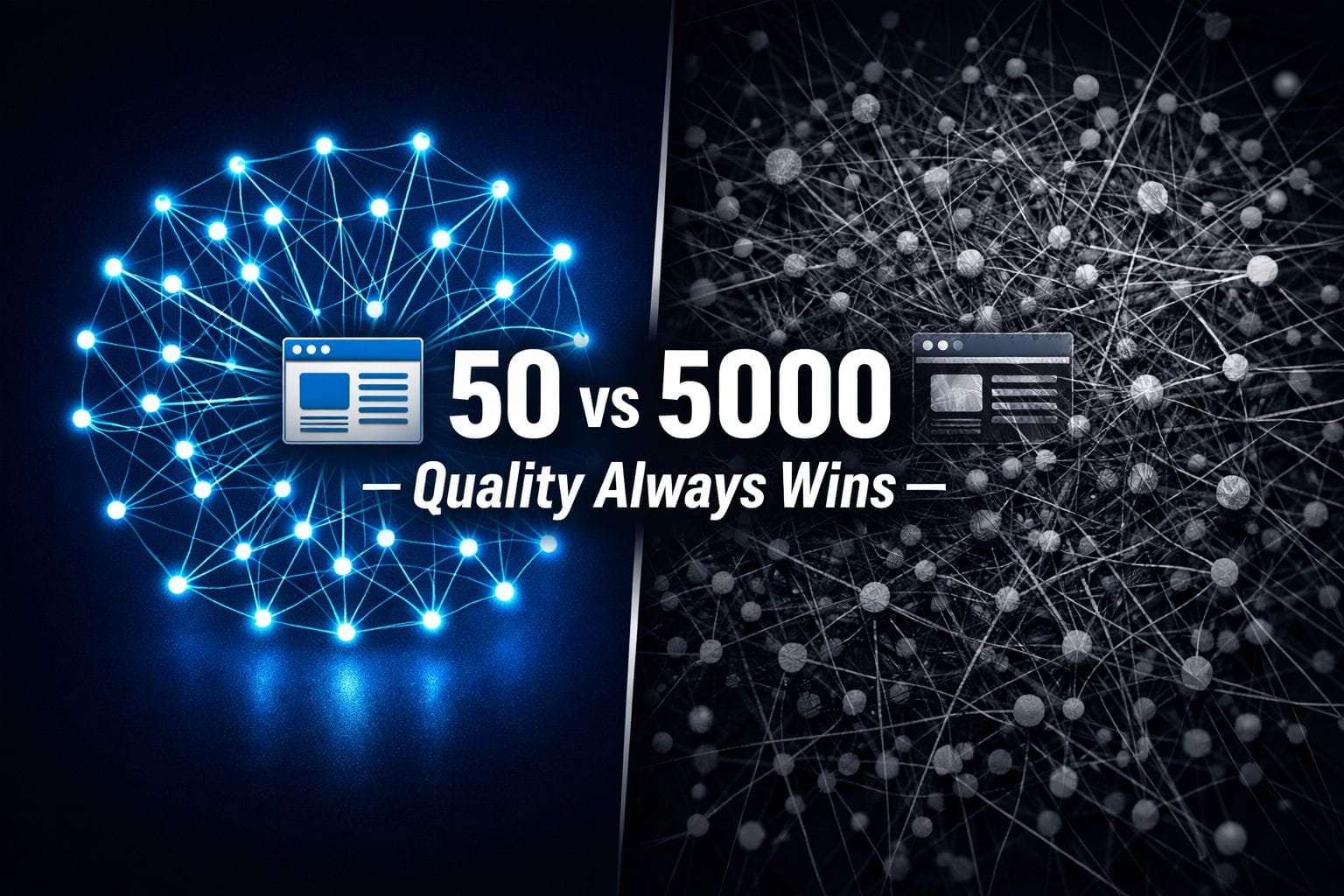
The instinct to accumulate as many links as possible is understandable but dangerous. Buying link blasts or submitting to mass directories might create a brief rankings bump, but it leaves your website exposed to algorithmic penalties. The 2026 data is clear: 94% of experienced link builders prioritize quality over quantity. The few percent who still chase volume tend to be newer to the field.
Mistake 2 Ignoring Topical Relevance
A link from a cooking blog pointing to a B2B software company carries almost no value. Yet I regularly see website owners celebrating links from completely unrelated sources simply because the domain rating looks respectable. Relevance and authority together are what move rankings. Relevance alone matters more than authority alone in many cases.
Mistake 3 Over-Optimized Anchor Text
Using the same exact-match keyword phrase as anchor text across 60 or 70 percent of your backlinks is one of the clearest unnatural patterns in any backlink profile. I have seen this destroy rankings for otherwise well-built websites. The fix is to build a diverse anchor text profile from the start rather than trying to correct it after a penalty.
Mistake 4 Building Links Too Fast
Cold outreach is already saturated in 2026, with only 8.5% of cold emails resulting in a backlink. Trying to compensate by sending more emails faster often backfires. Personalized, value-first outreach consistently outperforms templated mass campaigns by a ratio of 3 to 1. Pace your campaigns. Build relationships, not just links.
Mistake 5 Neglecting Your Own Backlink Profile Health
Negative SEO remains a real threat. Competitors or automated spam tools can point toxic links at your domain. Failing to monitor and address these links is a passive mistake that can quietly erode your rankings over months. Monthly audits using Ahrefs or Semrush, combined with Google Search Console monitoring, are non-negotiable for any serious SEO campaign.
SECTION 07
Prince SEO Agency 5-Step Backlink Evaluation Framework
Before we pursue any link opportunity for a client, we run it through this evaluation process. This framework was built from studying hundreds of backlink profiles and observing which link characteristics consistently correlated with ranking improvements versus neutral or negative outcomes.
| Step | What We Check | What We’re Looking For |
| 01 — Relevance Check | Does the linking domain cover our client’s industry or closely related topics? | At least thematic overlap; direct industry relevance preferred |
| 02 — Traffic Verification | Does the domain receive real organic traffic from Google? | Any traffic is a positive signal; zero traffic on a high-DR site is a red flag |
| 03 — Content Quality Review | Is the content on the site genuinely written for a human audience? | Real editorial voice, not templated or spun content |
| 04 — Link Placement | Where will our link appear — body, footer, sidebar, or bio? | In-content editorial placement only; footers and sidebars are deprioritized |
| 05 — Anchor Text Fit | Will this anchor text add natural diversity to our client’s existing profile? | No duplication of already-overused anchor patterns |
We walk away from links that fail Step 2 (zero traffic) or Step 3 (thin, templated content) regardless of how impressive the domain rating looks. A high DR score on a dead or manipulated site is meaningless at best and risky at worst.
Practical Link Building Strategies for 2026
The best strategies in 2026 are the ones that create genuine value for both the website owner and their audience. That is not an idealistic statement it is a practical filter. Google’s systems have become sophisticated enough that purely transactional link building increasingly triggers quality signals that suppress or neutralize the value of those links.
Strategy 1 Digital PR
Nearly 48.6% of SEO professionals rate Digital PR as the most effective link building tactic currently available. It involves creating genuinely newsworthy content — original research, proprietary data, expert commentary, or unique studies — and distributing that content to journalists and publications in your industry.
The links earned through Digital PR typically come from high-authority news domains that are nearly impossible to reach through traditional outreach. A single well-placed feature can generate 10 to 30 high-value backlinks in a matter of weeks.
Strategy 2 Linkable Asset Creation
Content designed specifically to attract links comprehensive guides, free tools, original research reports, and data-driven infographics remains one of the highest-ROI long-term strategies. The 2026 data confirms that ‘Why posts,’ ‘What posts,’ and infographics consistently earn the most backlinks across industries. Long-form content (3,000+ words) earns 77.2% more links than shorter pieces, which reinforces the case for depth over brevity.
Content marketing is cited by 40.7% of marketers as the top method for passively building organic links, meaning the right assets continue attracting links long after they are published.
Strategy 3 Broken Link Building
This is a technique I use frequently for new clients who are starting with a thin backlink profile. Using Ahrefs, I find pages on relevant websites that link to resources that no longer exist. I then reach out to the publisher, point out the broken link, and offer our relevant content as a replacement. The conversion rate is higher than cold outreach because you are solving a real problem for the website owner.
Strategy 4 Targeted Guest Posting
Guest posting accounts for around 11.7% of the strongest link building results when done correctly. The key word is ‘correctly.’ Guest posts should be pitched to publications that are genuinely relevant to your industry, written with real depth and editorial quality, and approached with the primary goal of serving the audience rather than placing a link.
Mass guest posting on low-quality sites purely for links remains a high-risk tactic. Google has become increasingly effective at identifying and devaluing these patterns. Quality and relevance are the only viable filters.
Strategy 5 Resource Page Link Building
Many niche websites maintain curated resource pages for their audience. These pages are actively looking for valuable links to include. Finding them is straightforward: search for ‘best resources [your topic]’ or ‘[industry] + recommended reading’ and you will surface dozens of opportunities. The pitch is simple — show why your content adds value that the page does not already have.
Strategy 6 Unlinked Brand Mention Reclamation
One of the highest-ROI activities for established brands is monitoring the web for mentions that do not include a link. Tools like Ahrefs Alerts, Google Alerts, and Brand24 make this easy. When you find an article that mentions your brand or product without linking to you, a simple, polite outreach email asking the author to add a link converts at a significantly higher rate than cold outreach because the relationship already exists.
Strategy 7 HARO and Expert Platforms
Contributing expert quotes to journalists through Help a Reporter Out or similar platforms earns editorial links from high-authority news domains. Email remains the primary communication tool used by 45.1% of link building professionals, and HARO-style responses are one of the warmest possible uses of that channel. Consistency over months builds a meaningful portfolio of editorial citations.
Implementation Checklist Start Here
Use this checklist as the operational foundation for your first link building campaign in 2026:
- Audit your current backlink profile in Ahrefs or Semrush identify strengths, gaps, and any toxic links
- Analyse the backlink profiles of your top 5 competitors and map the sources they share
- Identify your most linkable existing content and strengthen it if needed
- Create at least one dedicated linkable asset a guide, tool, data report, or infographic
- Build a prospect list of relevant websites: publishers, resource pages, and journalists in your niche
- Set up personalized outreach using first names and specific references to the target site personalisation boosts success rates by 50%
- Review your current anchor text distribution before launching outreach to avoid over-optimisation
- Set up Ahrefs Alerts or Google Alerts for brand mentions to catch unlinked citations
- Pace your outreach follow up for at least 30 days after publishing new content, as 31% of successful link builders do
- Schedule a monthly backlink health audit and disavow any harmful links through Google Search Console
2026 Link Building Stats at a Glance
| Statistic | Figure | Source |
| Link builders who prioritise quality over quantity | 94% | PressWhizz 2026 |
| Pages with zero backlinks | 95% | Ahrefs / AIOSEO 2026 |
| Backlink advantage of #1 Google result over positions 2–10 | 3.8× | Backlinko / AIOSEO 2026 |
| Additional backlinks from long-form content (3,000+ words) | +77.2% | Backlinko 2026 |
| SEOs rating Digital PR as most effective tactic | 48.6% | Editorial.Link 2026 (518 respondents) |
| SEO budget allocated to link building (agencies) | 32.1% | Editorial.Link 2026 |
| Cold emails that result in a backlink | 8.5% | PressWhizz 2026 |
| Personalized outreach vs templated — conversion advantage | 3× better | PressWhizz 2026 |
| SEOs who believe nofollow links affect rankings | ~80% | Editorial.Link 2026 |
| Top tool used by link builders — Ahrefs | 59.1% – 82% | Editorial.Link / Bloggerspassion 2026 |
| Average guest post cost for high-quality placement | $692 – $957 | Bloggerspassion 2026 |
| Average monthly budget in competitive niches | $8,406 | Bloggerspassion 2026 |
| Marketers who believe link building stays important 5 years+ | 85% | LoopexDigital 2026 |
Frequently Asked Questions
Q1. Is link building still important in 2026?
Yes emphatically. The 2026 data from surveys of hundreds of SEO professionals confirms that backlinks remain one of Google’s three most important ranking signals alongside content quality and page experience. The approach has matured from volume-focused to quality-focused, but the fundamental role of links as trust signals is unchanged.
Q2. How many backlinks do I need to rank on page one?
There is no universal number. The answer depends entirely on your niche and the specific keyword you are targeting. The most reliable method is to analyse the backlink profiles of pages currently ranking in the top five positions for your target keyword and use their average as your benchmark
Q3. What is the difference between white-hat and black-hat link building?
White-hat link building earns links through genuine value creation, editorial relationships, and transparent outreach. Black-hat link building manipulates Google’s systems through paid schemes, private blog networks, and deceptive tactics that violate Google’s guidelines. Black-hat tactics can produce short-term results but carry severe long-term penalty risk.
Q4. Can I buy backlinks safely?
Google explicitly prohibits buying links that pass PageRank. The 2026 data shows that only 6.6% of sites that bought links saw measurable traffic increases, while the risk of penalties remains significant. Paid placements that are properly disclosed as sponsored content are a separate and acceptable category
Q5. How long does it take to see results from link building?
About 57% of professionals report seeing measurable results within one to three months of a consistent link building campaign. More competitive industries and higher-difficulty keywords can take six months or longer. Consistency and patience are the determining factors.
Q6. What is anchor text and why does the distribution matter?
Anchor text is the clickable text of a hyperlink. Google uses it to understand what the destination page is about. A natural anchor text distribution includes branded terms, partial-match phrases, exact-match keywords, and generic anchors. Over-reliance on any single type especially exact-match can trigger algorithmic filters
Q7. What is a toxic backlink and how do I handle one?
A toxic backlink comes from a spammy, irrelevant, or manipulative source. Examples include links from link farms, private blog networks, and low-quality mass directories. Regular audits using Ahrefs or Semrush help identify them. Serious toxic links should be disavowed through Google Search Console
Q8. Does internal linking help with link building?
Internal links distribute existing link equity across your site, help Google understand your content hierarchy, and improve crawl efficiency. While they do not replace external backlinks, a strong internal linking structure amplifies the value of every external link you earn
Q9. Are nofollow links worth pursuing in 2026?
Yes, in the right context. Nearly 80% of SEO professionals now believe nofollow links influence rankings to some degree. More importantly, nofollow links from high-traffic publications drive real visitors and build brand awareness. A natural backlink profile will always include both dofollow and nofollow links
Q10. What is link velocity and why does it matter?
Link velocity is the rate at which your site acquires new backlinks over time. A sudden, unnatural spike in link acquisition can appear suspicious to Google. Gradual, consistent growth looks organic. Pacing your campaigns and building relationships rather than chasing volume protects you from velocity-triggered algorithmic responses
Q11. How do I find link building opportunities in 2026?
The most reliable methods are competitor backlink analysis in Ahrefs or Semrush, broken link building, resource page prospecting, Digital PR outreach, and monitoring for unlinked brand mentions. Digital PR currently delivers the best success rate of any tactic according to 2026 survey data
Q12. Is guest posting risky for SEO?
High-quality, relevant guest posting on editorially reviewed publications remains a respected and effective tactic. What is risky is mass guest posting on low-quality or irrelevant sites purely for links. The quality and relevance of the host publication is the determining factor
Q13. What are the best tools for link building in 2026?
Ahrefs leads as the most widely used tool, trusted by 59.1% to 82% of practitioners depending on the survey. Semrush is the second most popular choice. Google Search Console is essential for monitoring your own profile. Hunter.io helps with contact discovery, and BuzzStream or Pitchbox assist with outreach campaign management
Q14. Can a small or new website compete through link building?
Yes. The most effective strategy for new websites is focusing on a narrow niche and building highly relevant links from smaller but authoritative publications within that niche. Competing for niche authority is realistic even with limited resources. The key is relevance and consistency over time
Q15. How often should I audit my backlink profile?
A full audit should be conducted at least once per quarter. Ongoing monitoring through Ahrefs Alerts and Google Search Console notifications should run continuously so you are aware of new links both good and potentially harmful in real time.
Trusted Resources
The following authoritative platforms informed the research and frameworks referenced in this article. Visiting these pages will deepen your understanding of link building from multiple expert perspectives.