

When I first started analyzing backlinks seriously, I believed the same thing most beginners believe: more backlinks mean higher rankings. But one evening while studying a competitor’s backlink profile, I noticed something that completely changed the way I understand SEO. A website ranking at the top of Google had fewer than 50 backlinks, while another site with more than 5000 links was struggling to reach page one. That moment forced me to dig deeper into real backlink data, analyze hundreds of ranking pages, and understand what Google actually values in links. What I discovered surprised me, and if you are building backlinks for SEO, it might completely change how you approach link building too
Table of Contents
The Backlink Count Myth Most People Believe
For a long time, the SEO industry has pushed a very simple idea: the more backlinks a website has, the higher it will rank. At first glance, this sounds logical. If links are votes of trust, then more votes should mean more authority.
But real search data tells a very different story.
When you start analyzing backlink profiles of ranking websites across different industries, you quickly notice something interesting. The websites that dominate search results are not always the ones with the highest number of backlinks. Instead, they are often the ones with the strongest and most relevant backlinks.
Google’s algorithms don’t evaluate links as simple numbers. They evaluate them as signals of credibility, context, and trust.
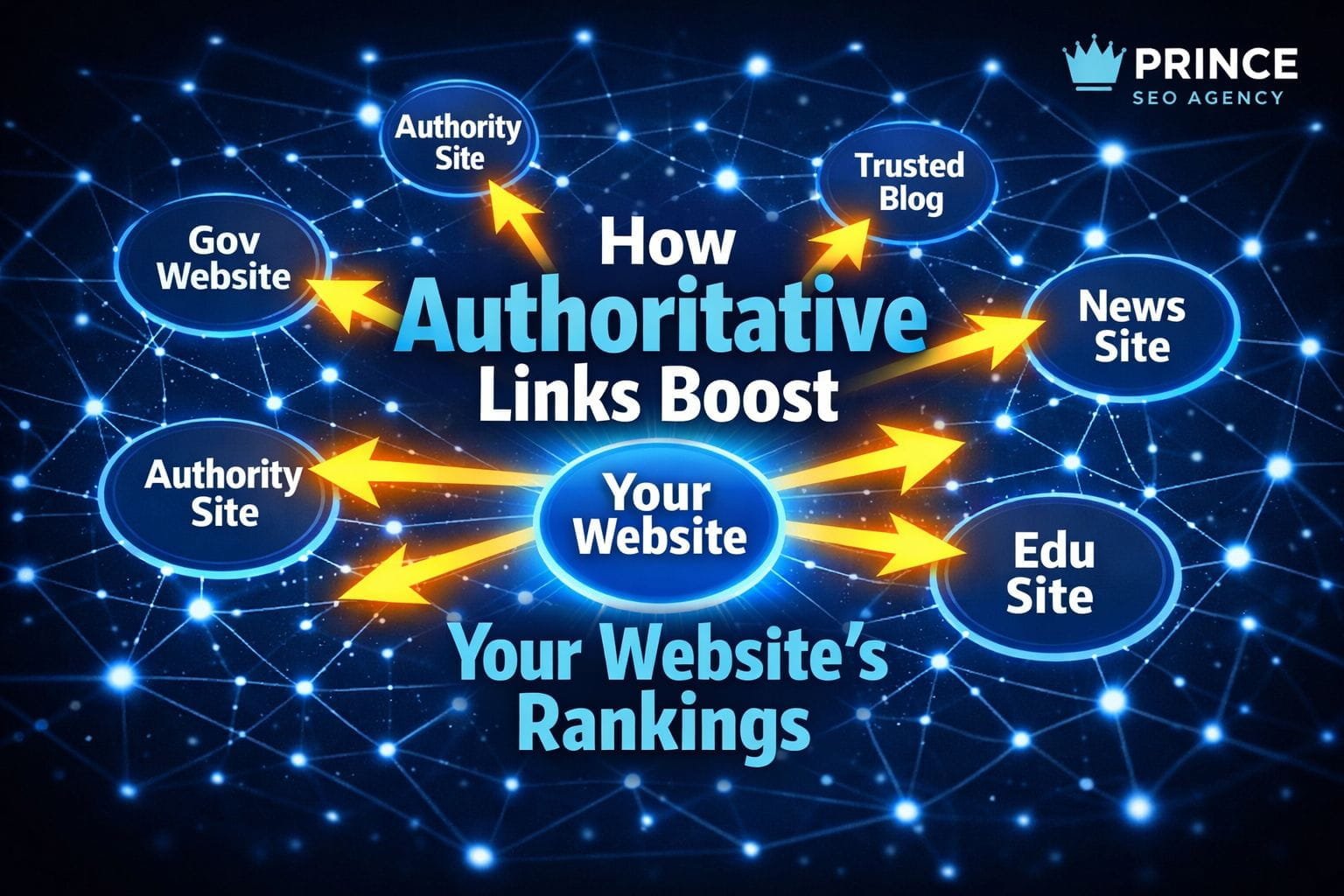
A backlink from a respected industry website can sometimes pass more ranking value than hundreds of links from low-quality directories or unrelated blogs. This is why a website with 50 powerful backlinks can outrank another site with thousands of weak ones.
Understanding this difference is the moment when most SEO strategies start to change.
Because once you realize that Google cares more about who is linking to you rather than how many are linking to you, the entire approach to link-building becomes very different.
Instead of chasing link quantity, you start focusing on link quality signals, the factors that actually determine whether a backlink strengthens your rankings or simply becomes background noise in your profile.
And this is where the real story begins.
The Backlink Count Myth
Let me say something that might challenge how you currently think about link building.
Google does not care how many backlinks you have. Google cares what those backlinks say about your website.
Backlinks are votes of trust. But not all votes carry the same weight. A backlink from a random article directory built in 2012 with no traffic is not the same as a vote as a backlink from a well-trafficked industry blog that has been linking to authoritative resources for years. One is a genuine endorsement. The other is background noise.
Google’s Search Quality Rater Guidelines make this clear when they explain how PageRank, the foundational link signal, works by passing authority from one page to another. What matters is not just the raw number of incoming links. It is the quality and relevance of the pages doing the linking.
When I analyzed that 48-domain website, the picture became obvious. Thirty-one of its 48 backlinks came from websites with real, measurable organic traffic, meaning actual humans visited those sites regularly. Every single linking domain was topically relevant to the home improvement niche. The backlinks were placed inside body content, not in footers, sidebars, or author bios. The anchor texts were natural, mostly branded or partially matched with no sign of over-optimization. And several of those linking pages had strong external backlink profiles of their own.
Compare that to our client’s 600 referring domains, which included dozens of generic blog comment links, low-traffic guest posts on completely unrelated topics, and directory submissions that had never seen a human visitor. The numbers looked impressive in a report. The actual signal they sent to Google was weak.
Once I saw it that clearly, the lesson was evident. Fifty powerful, relevant, trusted links will almost always beat five hundred weak, irrelevant, or artificial ones.
But this raised an even more important question.
If backlink quantity is not the real ranking factor, then what exactly does Google evaluate when it looks at a link?
To answer that, I started studying hundreds of backlink profiles across different industries, and five clear patterns began to appear.
And those patterns explain why some websites rank with just a handful of links while others keep building thousands and still fail to move
The Five Quality Signals Hiding Inside Every Backlink
After this realisation I started building what we now call the Prince SEO Agency Backlink Evaluation Matrix. Before I share that framework, I want to walk you through the five actual quality signals that determine how much value a single backlink carries.
Topical Relevance
This is the most underestimated signal in most link building conversations. When a plumbing website earns a backlink from a DIY home improvement blog, Google understands the context. The linking site talks about home problems. Your site solves home problems. The semantic connection is clear.
But when that same plumbing website earns a backlink from a travel blog because someone accepted a guest post in exchange for a link, Google’s algorithms are smart enough to notice the disconnect. The link exists, but it does not carry the same contextual weight because the topical relationship between the two sites is absent.
I have seen websites in the legal niche outrank much larger competitors almost entirely on the strength of topically matched backlinks from bar association websites, legal news platforms, and law school resource pages. They had fewer links overall. But every link was speaking the same language as the site it pointed to.
Page-Level Authority
Domain authority is a useful starting point, but it is the page-level authority that actually drives PageRank flow. A backlink from a DR 70 domain sounds impressive. But if the specific page doing the linking has zero external backlinks pointing to it, it carries far less weight than a link from a page on a DR 50 domain that has been cited by 20 other authoritative websites.
This is something beginners almost never check. They look at the domain rating and stop there. When I evaluate a link opportunity, I always check both the domain and the specific page that would be linking to us. The question I want answered is simple: Is this individual page itself considered trustworthy by Google?
Link Placement
Google’s algorithms have always worked to understand editorial intent. A link that a human author chose to place in the middle of body content because they genuinely believed it added value for their reader is treated differently from a link dropped into a widget, a footer, or a site-wide navigation bar.
The editorial value of a contextual link is significantly higher than a technical one. This is not just theory. When I audit the backlink profiles of websites that punch above their weight in the search results, the percentage of contextual body links is consistently higher than in websites that are link-heavy but ranking poorly.
Anchor Text
Anchor text, the clickable text of a hyperlink, is one of the most powerful relevance signals in SEO and one of the easiest to misuse. I have done penalty recovery work for several sites. Almost every manual or algorithmic penalty I have seen related to backlinks traces back to over-optimized anchor text. When too many backlinks use the exact same keyword phrase, Google reads it as manipulation rather than organic endorsement.
The websites that rank with fewer backlinks almost always show a natural anchor text distribution. You will see branded anchors, generic anchors like “read more” or “this guide,” partial match anchors, and only a small percentage of exact keyword match anchors. This variety signals that real humans are choosing to link naturally, which is precisely the trust signal Google is looking for.
Link Velocity and History
Timing matters more than most people appreciate. A website that earns five strong backlinks per month over twelve months looks completely different to Google than a website that suddenly accumulates sixty backlinks over two weeks. Google’s systems are built to detect unnatural spikes. Natural link velocity grows in proportion to a site’s content output, its brand visibility, and its overall growth trajectory.
When I look at websites that ranked well with only 50 backlinks, I almost always find that those 50 links were earned across months or years, sometimes through PR activity, sometimes through genuinely useful content, and sometimes through consistent outreach. They were not forced into existence overnight. That organic growth pattern is itself a trust signal.
But once you understand these five signals, another question naturally follows.
If these are the signals Google evaluates inside every backlink, how do you actually measure them before building a link?
This is where the framework we use inside Prince SEO Agency becomes useful.
Because instead of guessing whether a backlink might help rankings, we evaluate every potential link using a structured system that filters weak opportunities and prioritizes the ones that actually move search positions.
Let me show you how that framework works
Patterns I Keep Seeing in Websites That Rank With Fewer Links
Over the years at Prince SEO Agency I have audited hundreds of backlink profiles across dozens of niches. Certain patterns appear consistently in the websites that outperform their link count.
They Own a Specific Topical Space
The websites that rank with fewer links are almost always the most topically focused within their niche. They do not try to cover everything. They build deep, interconnected content around a specific cluster of topics and they earn their links specifically within that cluster.
Google’s understanding of topical authority means that a site seen as the go-to resource for a specific subject area will rank more easily than a broader site with more links but no clear topical identity. The pattern of incoming links from related sites reinforces that topical signal and reduces how many total links are needed to achieve strong rankings.
Their Content Earns Links Because It Is Genuinely Useful
This sounds obvious but it is practised far less consistently than it should be. The sites ranking with small backlink profiles almost always have at least a few pieces of content that became genuine reference resources in their niche. A comprehensive guide, a data study, an original methodology, a visual explainer something that other writers in the space naturally reached for when they needed to point their readers somewhere credible.
I once analysed a small personal finance blog that was ranking for surprisingly competitive keywords with fewer than 80 total backlinks. When I pulled the full profile I found that just three cornerstone articles were responsible for nearly 70 percent of the site’s entire link equity. Those three articles had been linked to by more than 40 relevant finance and economics websites. The rest of the site simply rode on the topical authority those three pages had built.
They Have Strong Brand Signals Alongside Their Links
Google does not evaluate links in isolation. It evaluates links alongside brand signals branded searches, consistent business information across the web, social mentions, unlinked brand citations (sometimes called co-citations or implied links), press coverage, and Knowledge Graph associations.
The websites that rank well with fewer links almost always have a strong brand presence that amplifies each link they earn. Google sees the same brand name being searched, mentioned, and cited across multiple platforms. That brand context makes each individual backlink carry more weight because it exists within a broader pattern of credibility.
When these three elements come together strong topical focus, genuinely useful content, and recognisable brand signals the impact of each backlink becomes significantly stronger. That is why some websites appear to rank with surprisingly small backlink profiles.
But understanding these patterns is only the first step.
The real question is how to apply these insights in a practical way when evaluating backlink opportunities for your own website.
Inside Prince SEO Agency we approach this using a simple framework that helps us quickly separate high-value backlink opportunities from links that look good in reports but contribute very little to actual rankings.
Let me show you how that framework works
Their Backlinks Come From Pages With Real Organic Traffic
This is the data point I check every single time without exception.
A backlink from a page that receives zero organic traffic is technically still a link. But in reality it carries almost no referral potential and sends very weak trust signals to Google.
When I analyze the backlink profiles of websites that are ranking above their apparent link strength, one pattern shows up repeatedly. Most of their backlinks come from pages that have their own measurable organic traffic.
That matters for a simple reason.
If a page receives organic traffic, it means Google trusts that page enough to rank it for something. It also means Google’s crawlers visit it regularly and real users interact with the content on it.
A link placed on a page like that exists inside a living part of the web.
Compare that to links placed on pages that receive no traffic, are rarely crawled, and are buried inside outdated guest posts or forgotten directories. Technically those links exist. But from Google’s perspective they contribute very little to trust or authority.
Once you start filtering backlinks through this lens, a huge portion of the internet’s link inventory immediately becomes irrelevant.
And that leads directly to the biggest mistakes I see businesses make when they try to build backlinks at scale.
The Mistakes That Turn 5000 Backlinks Into Deadweight
I work with SEO clients at various stages of their journey, and I see the same mistakes repeated constantly when people chase backlink numbers instead of backlink quality.
Buying Link Packages Without Checking Traffic
The link building industry is full of packages offering 50, 100, or even 500 backlinks. The sales pitch usually sounds impressive: high domain authority, permanent links, white hat methods.
But when I audit those backlinks, the pattern is almost always the same.
The linking sites have little or no organic traffic.
Domain Rating can sometimes look respectable because of internal linking between private blog networks or artificially inflated metrics. But if no real users visit those websites and Google barely indexes them, those links carry almost no real value.
My rule today is simple.
Before counting any backlink as a genuine asset, I check whether the linking page has organic traffic. If it does not, I usually ignore it.
Building Links on Completely Unrelated Sites
I understand why people make this mistake. Someone offers a guest post opportunity on a DR 60 website and it feels like a strong opportunity.
But if your website is about B2B software and the linking site publishes lifestyle and wellness content, the contextual signal is extremely weak.
Google has repeatedly indicated through algorithm updates and quality guidelines that topical relevance matters.
A backlink becomes powerful when the linking site exists within the same conversation as your website.
Over-Optimising Anchor Text
Anchor text is one of the strongest relevance signals in SEO, but it is also one of the easiest signals to misuse.
When too many backlinks use the exact same keyword phrase, Google interprets the pattern as manipulation rather than natural endorsement.
Healthy backlink profiles almost always show diversity.
You will typically see:
• 40–50 percent branded anchors
• 20–30 percent generic or URL anchors
• 15–20 percent partial keyword anchors
• 5–10 percent exact match anchors
Anything beyond that range begins to look artificial.
Ignoring Link Velocity
Legitimate websites rarely gain hundreds of backlinks overnight.
If a website suddenly accumulates 200 backlinks within a few weeks after a long period of inactivity, Google’s systems often interpret the spike as suspicious.
Sustainable link building looks very different.
Three to ten strong links per month, earned consistently over time, usually create a far healthier authority profile than large bursts of activity.
Not Auditing the Existing Profile
One of the most common situations I encounter when starting work with a new client is that they have never audited their backlink profile.
Over the years they have accumulated links from directories, comments, guest posts, scraped content, and sometimes even spam networks.
Without a proper audit, those toxic links continue to dilute the trust signals of the entire backlink profile.
Before building new links, understanding the health of the existing profile is essential
The Prince SEO Agency Backlink Evaluation Matrix
After years of auditing backlink profiles and studying why small link profiles so often outrank larger ones, we developed an internal scoring framework at Prince SEO Agency.
We call it the Backlink Evaluation Matrix.
Whenever we evaluate a potential backlink opportunity — whether during outreach, competitive analysis, or a client audit — we score it using five criteria.
Each criterion receives a score from one to five.
This gives a maximum possible backlink score of 25.
| Criterion | What We Evaluate | Max Score |
|---|---|---|
| Topical Relevance | Does the linking site discuss the same or a closely related topic? | 5 |
| Page Traffic | Does the linking page receive organic traffic? | 5 |
| Editorial Placement | Is the link placed inside body content by an editor? | 5 |
| Domain Trust | Domain authority and domain history | 5 |
| Anchor Naturalness | Does the anchor text feel natural within the content? | 5 |
A backlink scoring 20 or above becomes what we classify as a Tier 1 opportunity.
These are links worth serious outreach effort.
Links scoring between 14 and 19 are Tier 2 opportunities, useful when stronger opportunities are limited.
Anything scoring below 13 is generally ignored, regardless of how impressive the domain authority appears.
And here is the most important insight from years of running this matrix.
A Tier 1 link from a DR 35 website will almost always outperform a Tier 2 link from a DR 75 website.
Because relevance, real traffic, and editorial trust signals consistently outperform raw domain authority.
Backlink Building Strategies That Actually Move Rankings
If there’s one thing I’ve learned the hard way, it’s this: rankings don’t move because you “built backlinks.” Rankings move when you build the right backlinks, in the right places, for the right reasons. These are the strategies we’ve seen consistently move positions across niches.
The Broken Link Replacement Method
This is one of the most underused high-return tactics in link building. The idea is simple. Many high-authority resource pages in your niche still link to dead pages that no longer exist. Those broken links hurt the reader experience, and site owners usually want to fix them.
What we do is find those broken outbound links on relevant pages, then reach out with a genuine replacement. Not a random blog post. A piece of content that actually fills the same gap the dead link left behind.
This outreach performs better than most cold guest post pitches because you are solving a real problem first. You’re not asking for a favour. You’re helping them improve their page.
If you want to make this work consistently, the trick is to match intent. If the broken link was pointing to a “how-to guide,” replace it with a better guide. If it was a “tool,” replace it with a tool or a resource hub.
Create Original Research or Data Studies
Nothing earns backlinks more consistently than original data that other writers want to cite. And you don’t need a massive budget to do this. Even a small survey, a structured audit of 20–50 websites, or a dataset pulled from your own client work can become link-worthy if it answers a question your industry keeps asking.
In SEO, I’ve seen simple studies on page speed benchmarks, content structure patterns, and outreach response rates earn dozens of natural citations. Not because they were “viral.” Because bloggers and journalists need credible references, and original data gives them exactly that.
If you want this strategy to work, focus on one thing. Publish a study that helps people make decisions. Data that tells the reader what to do next earns links far more reliably than data that just looks interesting.
Expert Contributions and Media Outreach
Platforms that connect journalists with experts can be a goldmine for earning authoritative backlinks with strong brand signals attached. When a reputable publication quotes you as a named expert, you earn two things at once. A trusted backlink and a credibility stamp.
The biggest mistake people make here is treating it like a one-time activity. This strategy compounds when you show up consistently with helpful, original, insight-driven answers. Once you’ve been quoted a few times, journalists often start reaching out directly, and that’s where the real momentum begins.
If you want this to become a long-term link source, write responses like a specialist, not like a marketer. Be specific. Share frameworks. Share what you’ve seen in real audits. That’s what gets picked.
Digital PR and Newsjacking
Every industry has moments when news creates natural link opportunities. Algorithm updates, new regulations, market shifts, major studies, platform changes. The sites that respond fast with credible commentary often earn backlinks from industry blogs, newsletters, and roundups.
But newsjacking isn’t about chasing every trend. It’s about knowing your niche well enough that when something relevant breaks, you can publish the most useful explanation quickly. That combination of speed plus credibility is exactly what earns links.
When done right, this isn’t just link building. It’s brand building. And Google tends to reward that.
The Resource Hub Strategy
One of the most reliable link magnets is a genuinely useful resource hub. Not a thin “resources” page. A real collection of tools, templates, guides, checklists, or calculators that solves a repeated problem for your audience.
Once you have that hub, outreach becomes easier. You can find pages already linking to outdated or weaker resources and show them something better.
The pitch stays simple. You’re not begging for a link. You’re helping them improve their page by upgrading the resource they recommend.
This works even better when your resource hub stays updated. Most competing resources decay over time. A regularly updated hub becomes the obvious “best link” in the category.
Competitor Backlink Gap Analysis
This is a core service at Prince SEO Agency because it produces the warmest link opportunities. Using tools like Ahrefs or Semrush, we identify domains linking to top competitors that are not linking to our client.
These are warm targets because they have already proven they link out within the niche. We’re not trying to convince them that linking to a resource makes sense. They already do it.
The key is what happens next. We run each opportunity through our Backlink Evaluation Matrix, shortlist the Tier 1 targets, then build outreach angles that match the context of why they linked to the competitor in the first place.
This is where most people fail. They send generic emails. We tailor the outreach to the specific linking page, the specific topic, and the specific value gap. That’s why it converts
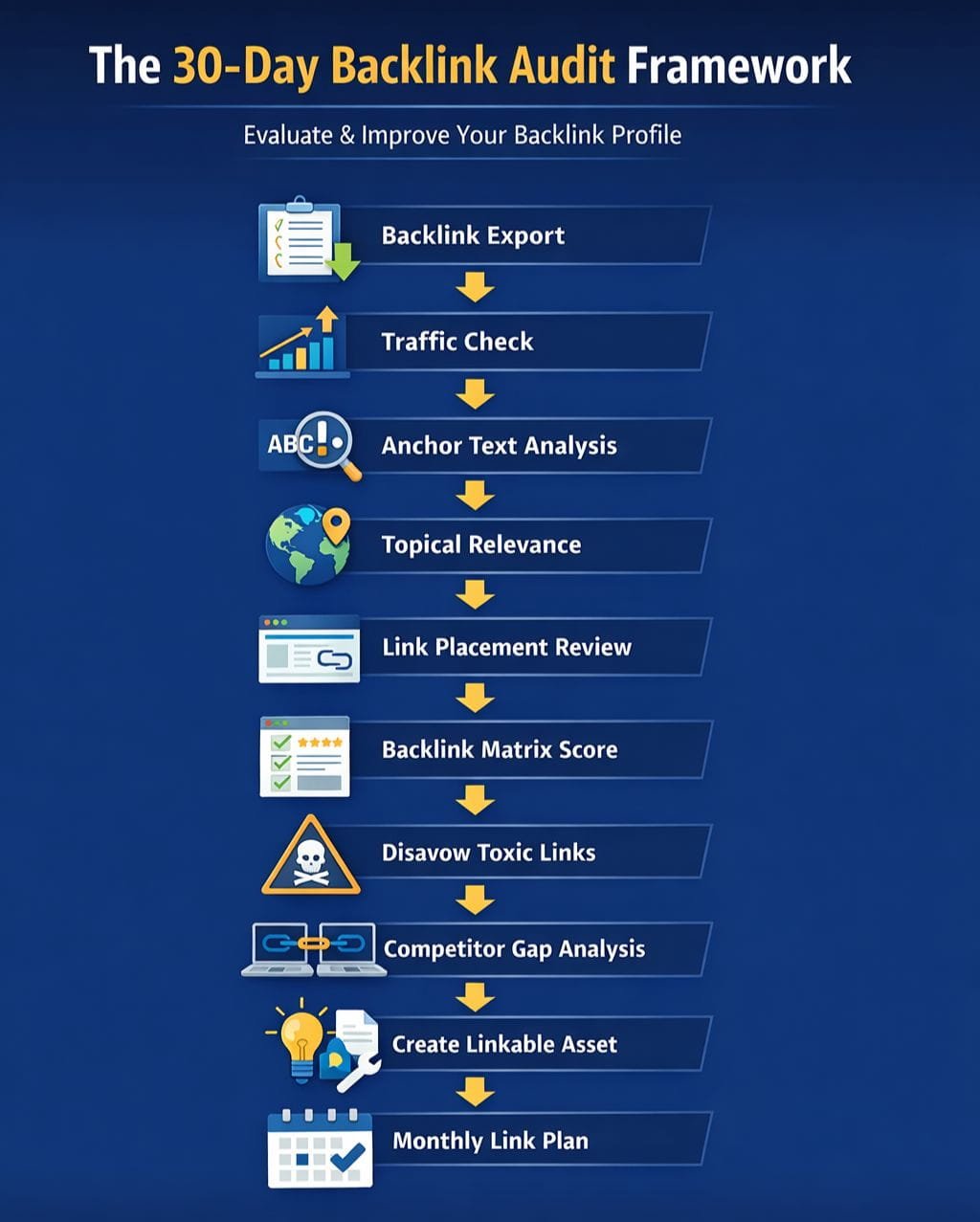
| Audit Step | What To Check | Recommended Action |
|---|---|---|
| Backlink Export | Download all backlinks from Ahrefs, Semrush or GSC | Create full backlink profile sheet |
| Page Traffic | Check organic traffic of linking pages | Flag pages with less than 100 monthly visits |
| Anchor Text Profile | Analyze branded, generic, partial and exact match anchors | Maintain natural anchor distribution |
| Topical Relevance | Check if linking sites are related to your niche | Ignore irrelevant domains |
| Link Placement | Identify contextual links vs footer/sidebar links | Prioritize editorial body links |
| Backlink Score | Run links through Backlink Evaluation Matrix | Focus on Tier 1 opportunities |
| Spam Links | Identify harmful or toxic backlinks | Create disavow file |
| Competitor Gap | Analyze competitors backlinks | Find linking domains missing from your site |
| Linkable Asset | Create content that deserves links | Publish guide, research or tool |
| Monthly Strategy | Plan consistent link building | Target 3–8 high quality links per month |
Frequently Asked Questions
Is domain authority the most important factor when evaluating a backlink?
No. Domain authority is only a starting point when evaluating a backlink. More important signals include topical relevance, the organic traffic of the linking page, and whether the link is placed naturally within editorial content. A relevant website with real traffic often passes more value than a high authority site that is unrelated to your niche
How many backlinks do I actually need to rank on page one?
There is no fixed number of backlinks required to rank on page one. Rankings depend on keyword competition, the topical authority of your website, content quality, and the strength of your existing backlink profile. Some websites rank with fewer than 30 backlinks when the links are highly relevant and the content is strong
Can a website rank without backlinks?
Yes, but usually only for very low competition long-tail keywords. For most competitive keywords, backlinks remain one of the strongest signals search engines use to evaluate authority and trust
What is the difference between dofollow and nofollow backlinks?
A dofollow backlink passes link equity from the linking page to the target page. A nofollow backlink contains a rel=”nofollow” attribute that historically told search engines not to pass authority. Today search engines often treat nofollow links as hints rather than strict directives
Should I disavow bad backlinks?
Only when you have strong evidence that the links are spammy or manipulative. Search engines are much better at ignoring low quality links automatically. Disavowing links unnecessarily can sometimes remove signals that are not actually harmful
How does link velocity affect rankings?
Link velocity refers to the speed at which a website gains backlinks. Natural websites usually earn links gradually as they publish content and grow their audience. Sudden spikes in backlinks without a clear reason can sometimes trigger algorithmic scrutiny
Are social media links valuable for SEO?
Most social media links are nofollow and do not pass direct ranking authority. However they can drive traffic, increase brand visibility, and help content get discovered by journalists or bloggers who may later create natural backlinks
What is topical authority and why does it matter for backlinks?
Topical authority refers to how deeply and consistently a website covers a specific subject area. When your site has strong topical coverage and earns backlinks from related websites within that niche, search engines begin to recognize it as a trusted resource
Is it safe to buy backlinks?
Buying backlinks intended to manipulate rankings violates search engine guidelines and can lead to penalties. The safer approach is to earn links naturally through high quality content, digital PR, outreach, and expert contributions.
How long does it take for backlinks to influence rankings?
It depends on how quickly search engines discover and evaluate the linking page. Some high authority backlinks can influence rankings within days, while others may take several weeks or even months before their impact becomes visible
Trusted Resources
The following pages are recommended for deeper reading on the concepts covered in this article.
Google Search Central
- Google Search Central Blog — Link Spam Updates Official updates on spam policies and ranking systems.
- Google Search Quality Rater Guidelines How Google evaluates quality, trust, and helpfulness.
Ahrefs Blog
- Link Building for SEO — The Beginner’s Guide Foundational link building concepts and methods.
- How to Do a Backlink Audit Practical steps to evaluate backlink quality.
Semrush Blog
- Backlink Audit Guide Audit workflow, toxic signals, and cleanup process.
- Link Building Tool and Strategies Tactics and strategy planning for link acquisition.
Moz
- The Beginner’s Guide to Link Building Core link building principles and best practices.
- Domain Authority Explained What DA means and how to interpret it.
Backlinko
- Backlinks — The Definitive Guide Comprehensive overview of backlinks and their impact.
- Link Building Strategies Tactical approaches and examples.
Search Engine Journal
- Link Building Guide Industry perspectives and practical guidance.
- How to Evaluate Backlink Quality Signals to assess link value and risk.