
Table of Contents
The Day I Audited a Website That Had “Done Everything Right”
A client came to me in early 2026, frustrated. He had been publishing content for 18 months. His blog had 60-plus articles. He paid a freelancer for backlinks. He had a “fully optimised” website at least, that’s what he believed.
His organic traffic: 220 visits per month.
That number hurt me to look at. Not because it was low. But because after 30 minutes of audit, I could see exactly why. Seven specific reasons. Seven SEO mistakes all silent, all invisible on the surface, all absolutely devastating to his rankings.
Here’s the brutal truth about SEO in 2026: Google is smarter, AI search is reshaping how results are picked, and the old tricks don’t just stop working they actively backfire. The mistakes I see in website audits are no longer about missing meta tags. They’re deeper, more structural, and far more damaging.
I’ve documented the most common and most dangerous of these mistakes below. If your website isn’t growing the way it should, read this carefully. At least one of these is the reason why.
Mistake #1: Publishing Content Without Topical Authority
What it is: Creating random, unrelated articles instead of building a structured content cluster around a core topic.
Why it happens: Most website owners think “more content = more traffic.” They chase keywords without a content strategy. Every post is an island.
I see this constantly. A business that sells accounting software writes one article about “best accounting tips”, another about “HR laws in India”, then one about “remote work productivity”. No connection. No depth. No signal to Google that this website is the authority on anything.
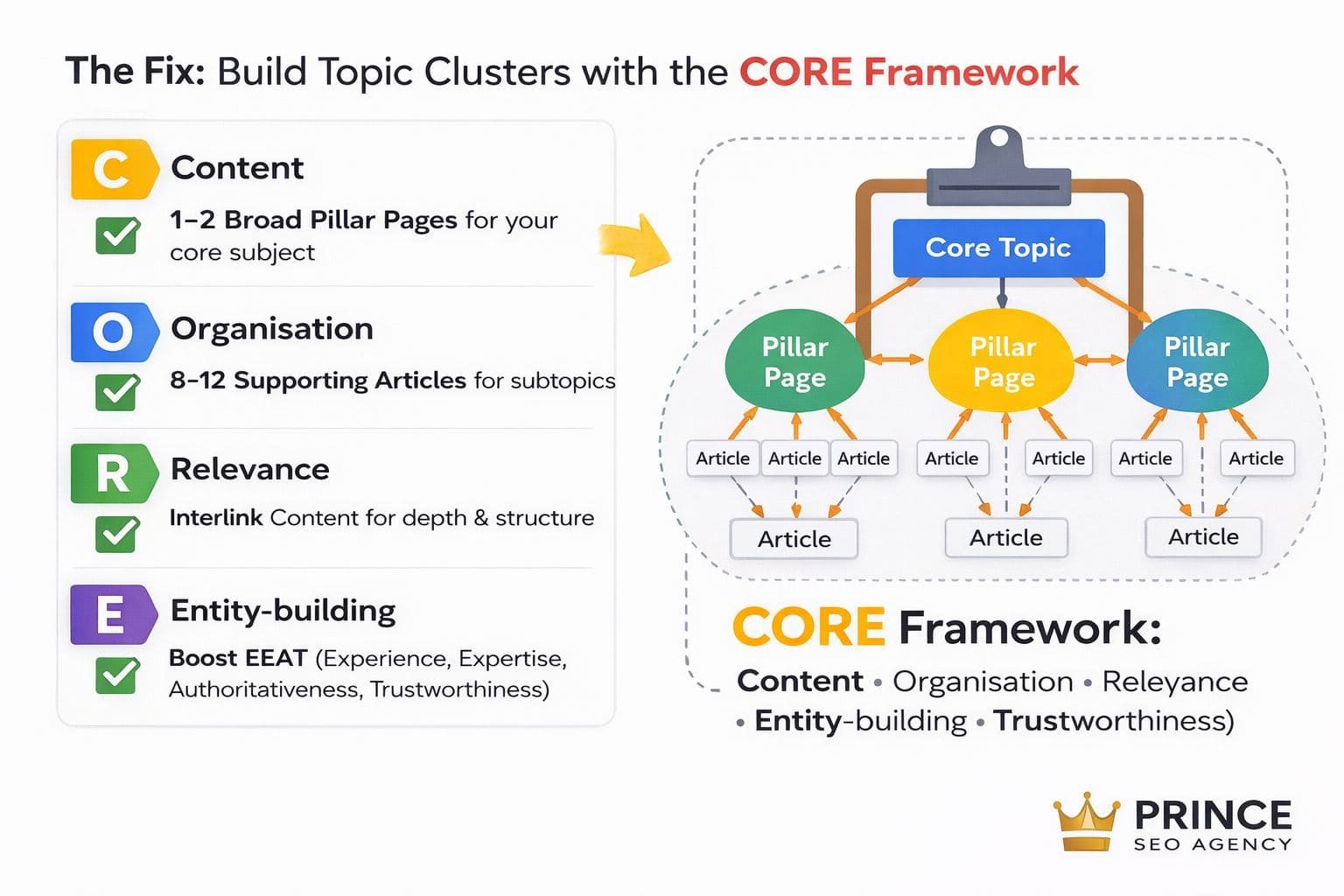
Google’s Helpful Content System in 2026 rewards topical depth. It looks for websites that comprehensively cover a subject not websites that sprinkle random content across unrelated topics. When your content is scattered, Google simply doesn’t know what your site is about. So it ranks you for nothing.
The fix: Map your content into topic clusters. Build one or two Pillar Pages that cover your core subject broadly, then create 8–12 supporting articles that go deep on subtopics. Interlink them properly. This is what we call the Prince SEO Agency CORE Framework Content, Organisation, Relevance, Entity-building.
Mistake #2: Ignoring Core Web Vitals Still, in 2026
What it is: Poor page speed, layout shifts, and slow interactivity scores dragging down your rankings.
Why it happens: People focus on content and backlinks but treat technical SEO as a “later” task. Later never comes.
Last quarter I audited a website that ranked on page two for 12 competitive keywords. Their content was excellent genuinely better than most competitors. But their Largest Contentful Paint (LCP) was 6.2 seconds on mobile. Their Cumulative Layout Shift (CLS) score was 0.31. These are failing grades.
Google’s Page Experience signals are now baked into ranking algorithms permanently. In 2026, with mobile traffic dominating and AI-powered search summaries loading fast, a slow website is a website that users bounce from instantly and Google records every bounce.
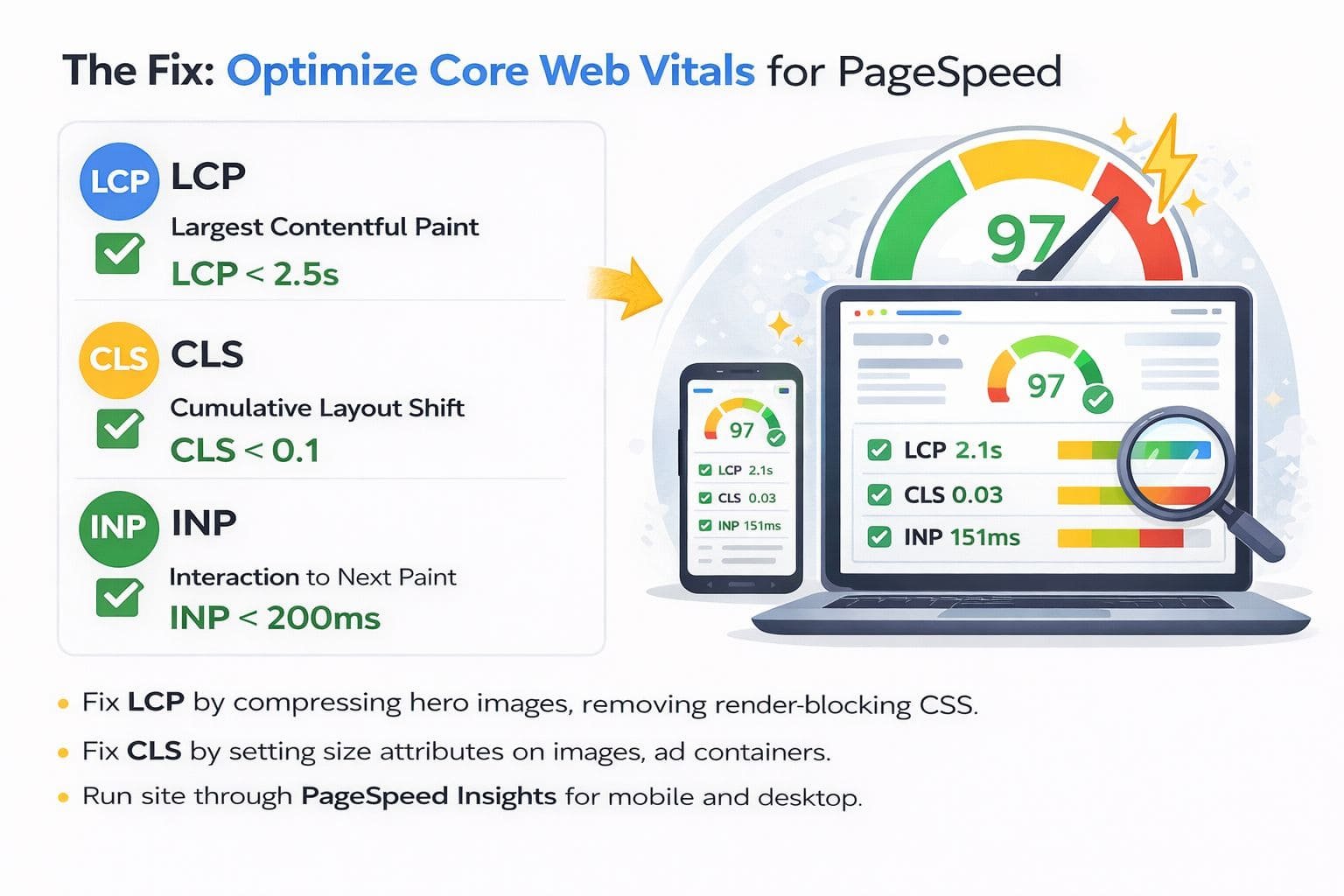
According to data referenced by Google Search Central, pages that meet all three Core Web Vitals thresholds see meaningfully better rankings in competitive SERPs compared to pages that fail even one metric.
The fix: Run your site through PageSpeed Insights (both mobile and desktop). Fix LCP first it’s almost always an uncompressed hero image or render-blocking CSS. Then fix CLS by setting explicit size attributes on images and ad containers. Target: LCP under 2.5s, CLS under 0.1, INP under 200ms.
Mistake #3: Building Backlinks to the Homepage Only
What it is: Getting all your link equity pointed at your homepage while your money pages and blog posts sit with zero authority.
Why it happens: Old-school link building focused on domain authority. People still think “make the homepage strong and it lifts everything.”
It doesn’t work that way anymore. I see this pattern in almost every backlink audit I run. A website has 40 referring domains 37 of them pointing to the homepage. The service page that needs to rank for “best digital marketing agency in Mumbai”? Zero backlinks. The blog post targeting a high-intent keyword? One backlink, from a comment on a random forum.
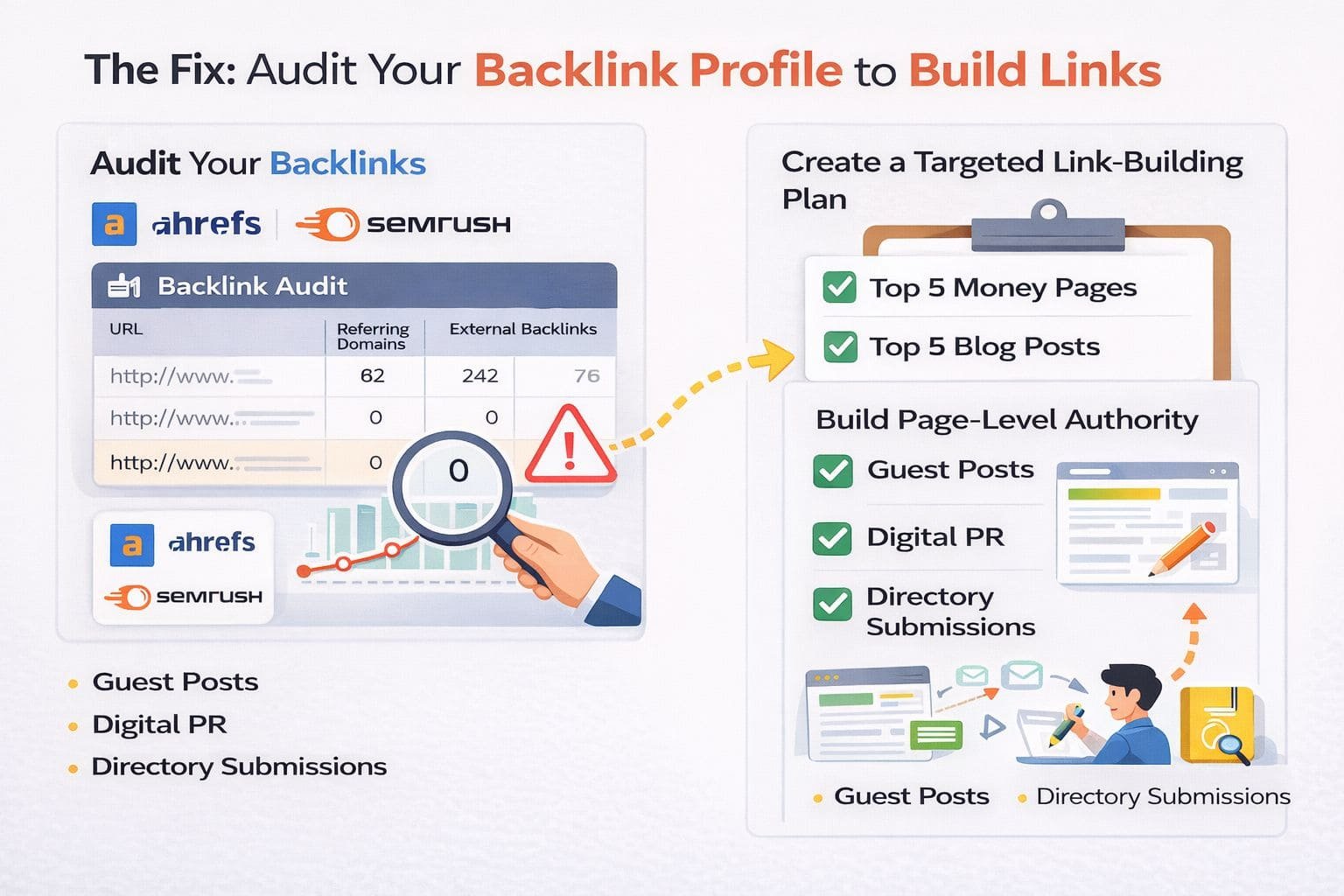
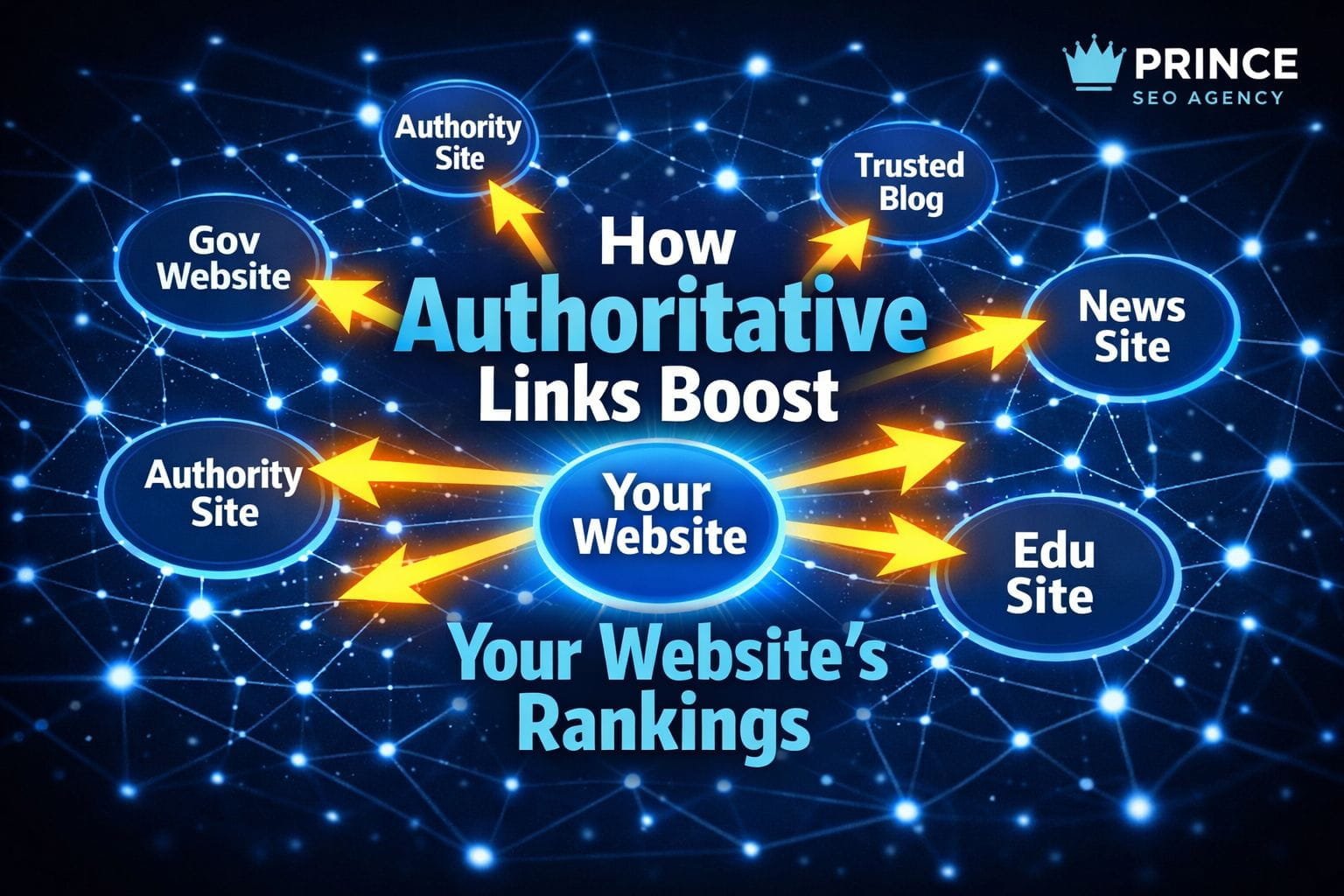
Google uses PageRank distribution. Links to the homepage do pass some authority downward through internal links, but it’s diluted and inefficient. If you want a specific page to rank, that page needs contextual backlinks from relevant, authoritative sources.
The fix: Audit your backlink profile with Ahrefs or Semrush. Look at which pages have zero external backlinks. Create a targeted link-building plan for your top 5 money pages and top 5 blog posts. Guest posts, digital PR, and niche-relevant directory submissions are the fastest ways to build page-level authority.
Mistake #4: Not Optimising for AI Search and GEO
What it is: Writing content that ranks in traditional search but gets completely ignored by AI-powered search engines like Perplexity, Google AI Overviews, and ChatGPT Search.
Why it happens: Most SEOs are still optimising for 2019 Google. AI search is a different beast it extracts answers, not just links.
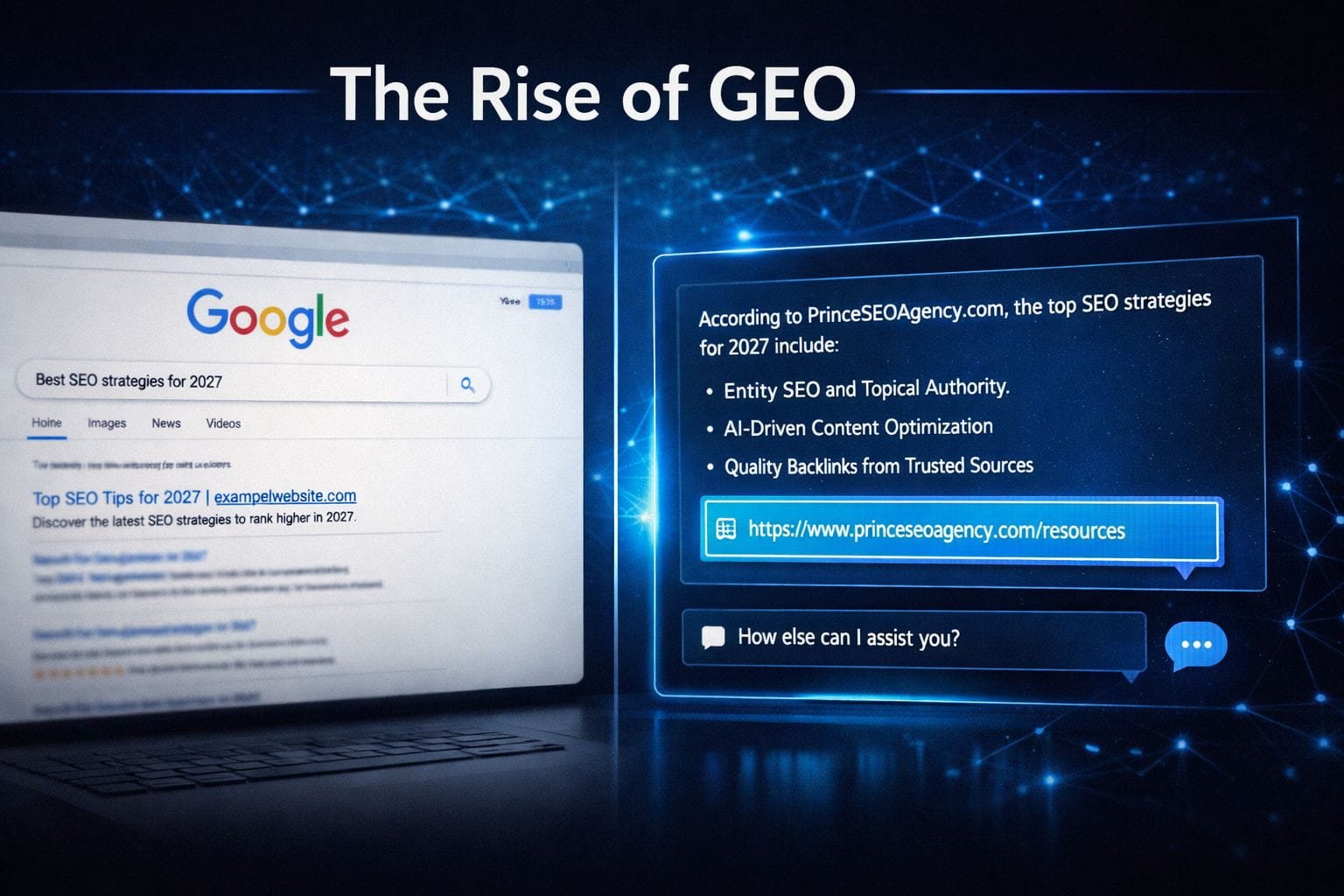
This is the biggest shift I’ve observed in 2025–2026. AI search engines don’t work like traditional Google. They read your content, extract the most credible and clear answer to a query, and cite the source. If your content isn’t structured for extraction if it buries the answer, lacks clear definitions, or uses vague language AI search engines skip your content entirely.
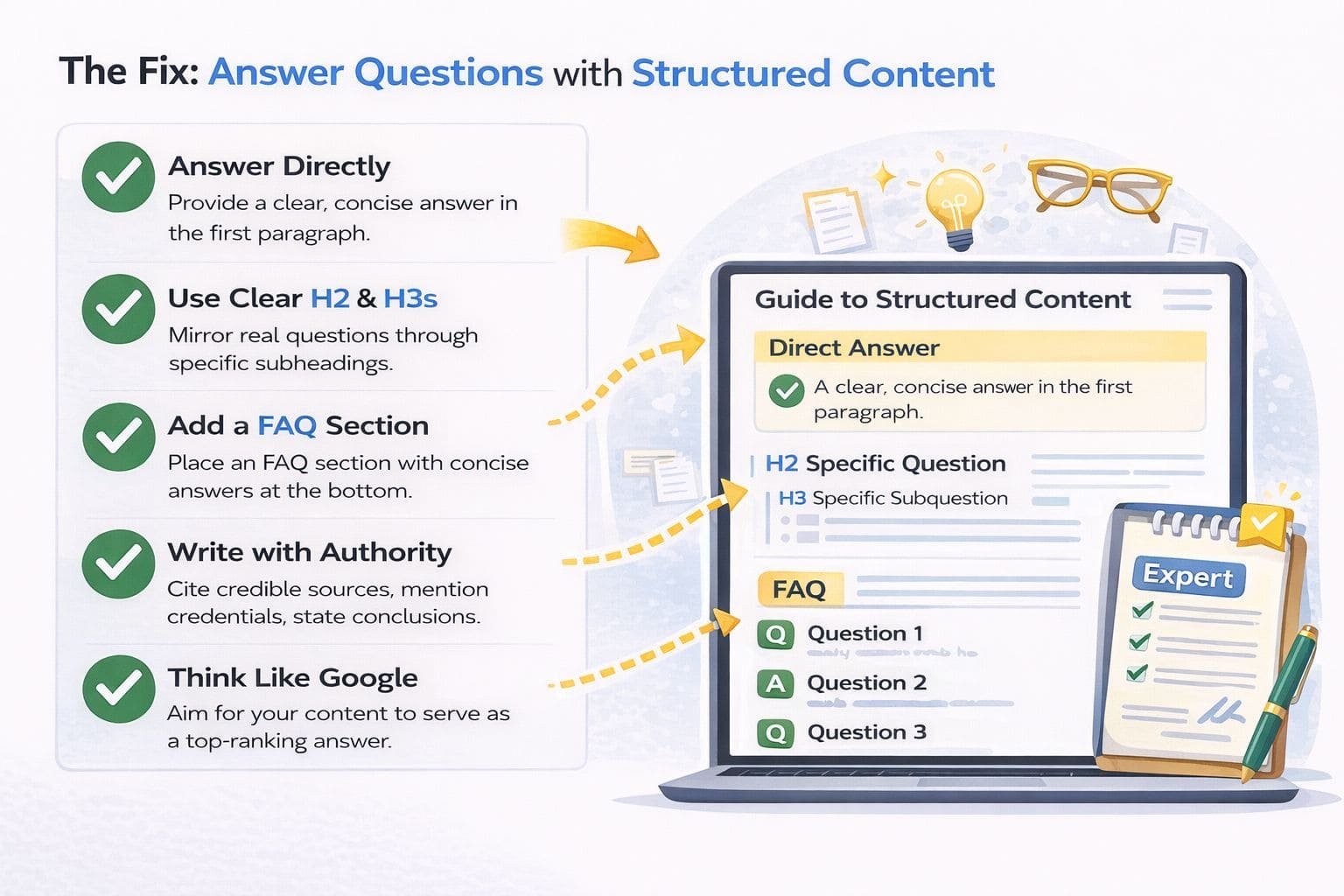
Generative Engine Optimisation (GEO) is now a real discipline. And websites that haven’t adapted are losing significant traffic that they can’t even see in Google Search Console, because it’s coming from and not coming from AI platforms.
The fix: Structure every article with a direct answer in the first paragraph. Use clear H2 and H3 subheadings that mirror actual questions. Add a concise FAQ section at the bottom. Write with authority cite data, mention your credentials, state your conclusions clearly. Think of your content as an answer, not just an article.
Mistake #5: Keyword Cannibalization Two Pages Fighting Each Other
What it is: Multiple pages on your website targeting the same keyword, causing Google to split authority and rank neither page well.
Why it happens: Content teams publish over time without auditing what already exists. After 50+ posts, cannibalization is almost inevitable without a system.
I found a client with four separate blog posts targeting variations of “digital marketing tips for small businesses.” Each post had some backlinks. Each post had decent content. But because they were all competing for the same search intent, Google was confused about which page to rank. The result: none of them ranked in the top 20.
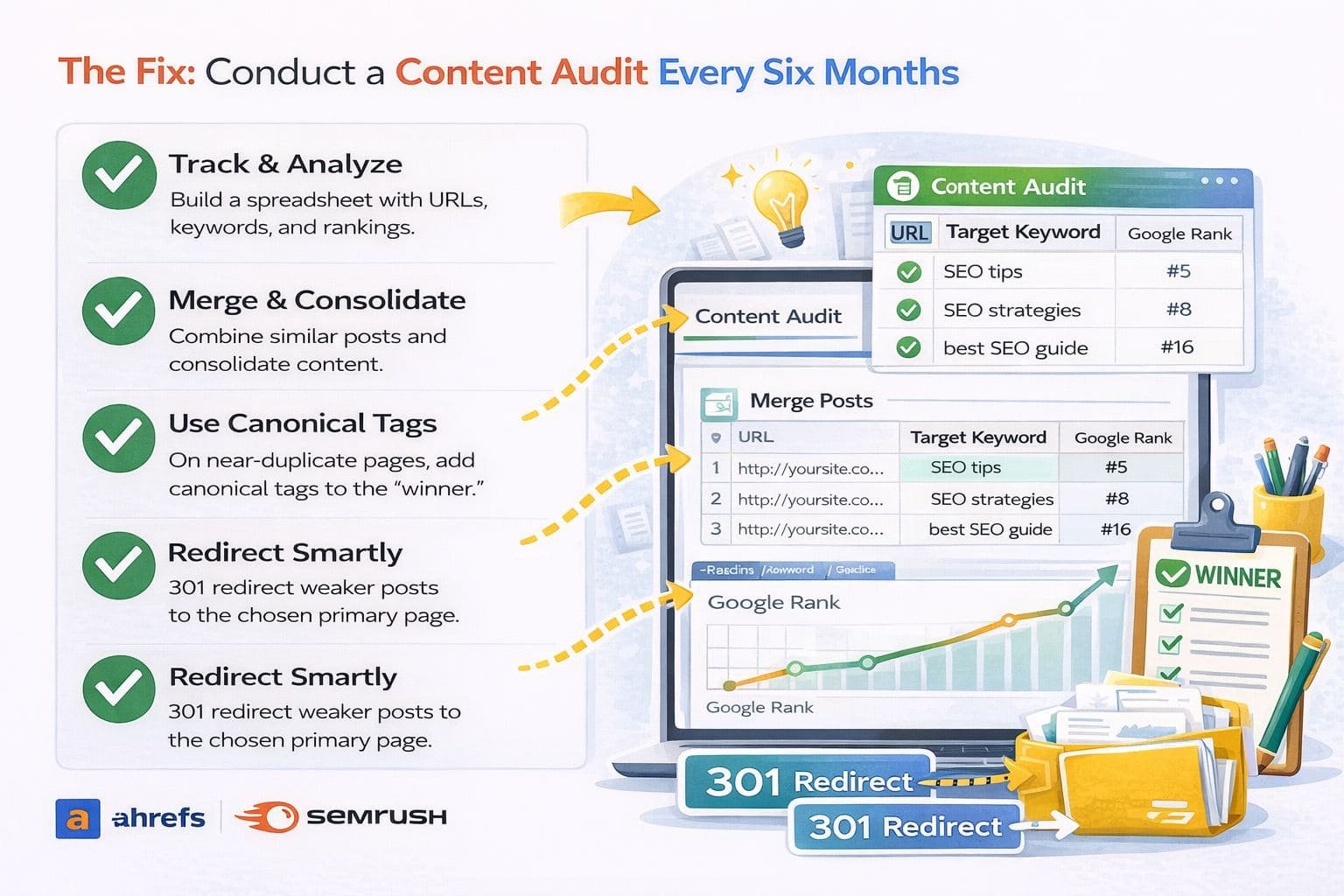
Semrush’s research shows that keyword cannibalization can suppress your rankings by splitting authority across competing pages. In competitive niches, the difference between ranking #3 and #18 can come down entirely to cannibalization.
The fix: Run a content audit every six months. Build a spreadsheet of all your posts, their target keywords, and their current ranking. Merge similar posts where possible. Use canonical tags on near-duplicate pages. Choose one page as the “winner” for each important keyword and redirect or consolidate the others.
Mistake #6: Writing for Search Engines, Not for People
What it is: Stuffing keywords, writing robotic intros, and producing content that technically “covers the topic” but has zero personality or genuine insight.
Why it happens: Years of old-school SEO advice told people to hit keyword density targets and include the keyword in the first 100 words. People still follow this.
Google’s Helpful Content Update and its successors in 2025 and 2026 specifically targets content written for search engines rather than humans. The signals are clear: high bounce rate, low time-on-page, no shares, no return visitors. If your content reads like a keyword-stuffed checklist, Google’s systems have become very good at detecting that.
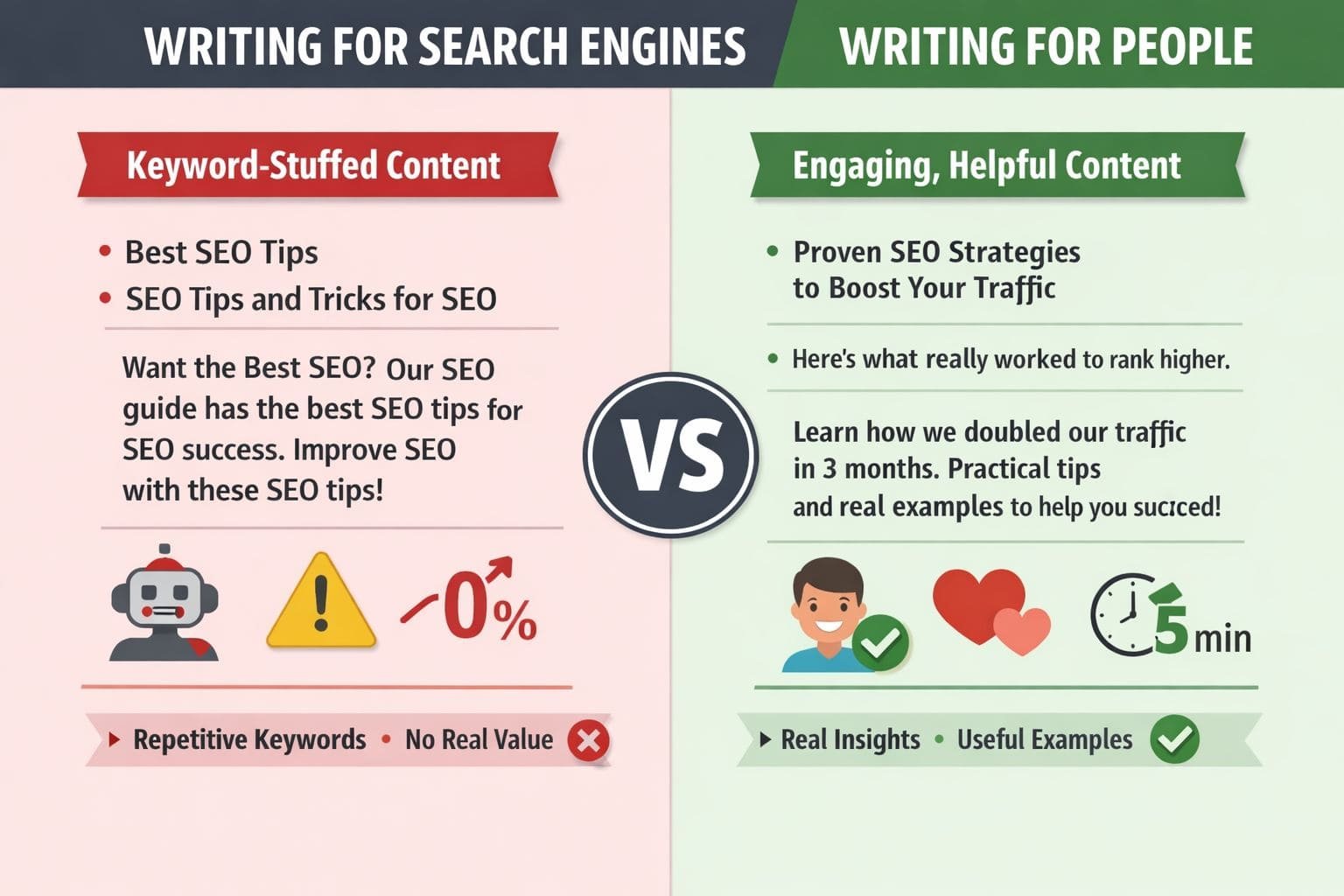
I’ve audited websites where the content passed every basic SEO checklist keyword in title, meta description optimised, headings structured and yet the site was tanking. Why? Because the content itself was hollow. No real examples. No personal experience. No insight that couldn’t be found on 50 other websites.
Google’s E-E-A-T guidelines (Experience, Expertise, Authoritativeness, Trust) are now a real ranking factor not just a quality rater guideline. In 2026, the “first E” Experience is the differentiator that most websites ignore.
The fix: Write from real experience. Share what you’ve seen, what worked, what failed. Add a clear author bio with credentials. Include specific numbers, case studies, and examples. Write your intro the way you’d explain the problem to a smart friend not the way you’d pitch it to an algorithm.
Mistake #7: Skipping Schema Markup in 2026
What it is: Not implementing structured data (schema markup) that helps Google and AI search engines understand your content better and display rich results.
Why it happens: Most website owners see schema as “advanced technical SEO” and defer it indefinitely. It’s actually straightforward and high-impact.
Schema markup in 2026 is not optional anymore. With AI Overviews pulling structured answers from content, and Google displaying rich snippets, FAQ accordions, and How-To steps directly in search results, not having schema is a competitive disadvantage that costs you click-through rates even when you rank.
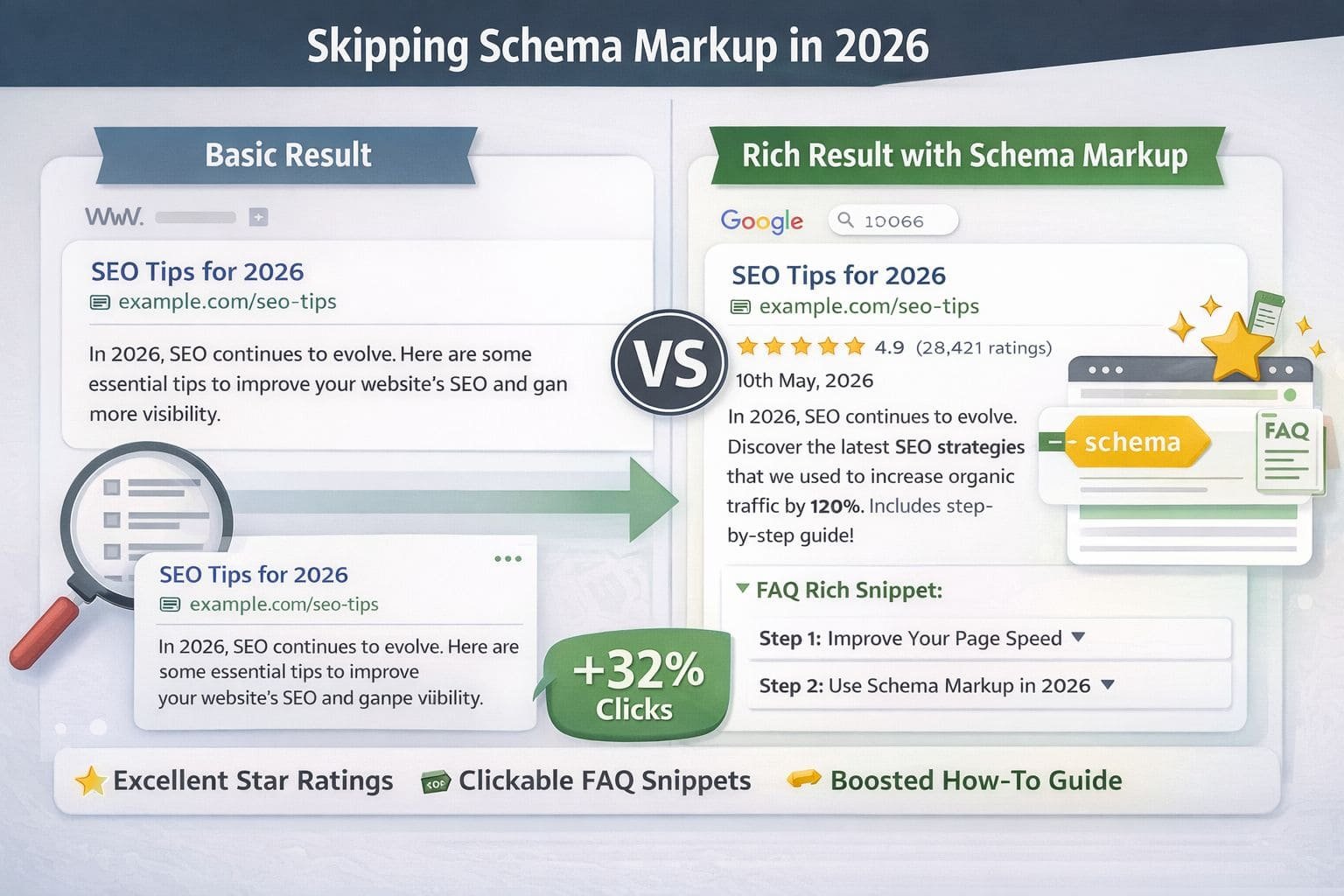
I run a quick schema check in every audit. About 70% of the websites I look at have no schema at all. The other 30% have broken or incomplete implementations usually auto-generated by a plugin that nobody verified
The fix: Implement Article, FAQ, BreadcrumbList, and Organization schema at minimum. If you have a service page, add LocalBusiness or ProfessionalService schema. Test every implementation with Google’s Rich Results Test before publishing. This is a one-time investment per page type that pays compounding dividends.
What I Actually See in SEO Audits
Across the audits I’ve run for Indian businesses, e-commerce stores, and service providers, the patterns are consistent. Here’s a quick summary of what shows up most:
| Issue Found in Audits | Frequency | Severity |
|---|---|---|
| No topical content cluster | 82% of sites | High |
| Failed Core Web Vitals (mobile) | 74% of sites | High |
| Homepage-only backlinks | 68% of sites | Medium-High |
| No GEO / AI search optimisation | 91% of sites | Critical (2026) |
| Keyword cannibalization (3+ pages) | 61% of sites | Medium |
| Keyword-first content, no real experience | 79% of sites | High |
| Missing or broken schema markup | 70% of sites | Medium-High |
Why Beginners Keep Making These Mistakes
There’s a pattern I’ve noticed. Website owners start with good intentions. They watch YouTube tutorials, join Facebook groups, maybe buy an SEO course. Then they implement the advice but the advice is 2–3 years old
The SEO landscape has changed more in the last 18 months than in the previous five years combined. AI search changed how content gets discovered. Google’s algorithm updates have gotten sharper about detecting low-effort content. And the technical bar for ranking has quietly risen
The result: beginners follow outdated playbooks and then blame SEO itself when it doesn’t work. The issue isn’t SEO. The issue is that the playbook needs to be updated
The Prince SEO Agency AUDIT Framework
When I work with a new client, I use a structured approach to diagnose and fix these issues in a logical sequence. I call it the AUDIT Framework:
- A — Analyse: Run a full technical crawl. Identify Core Web Vitals failures, crawl errors, and missing schema.
- U — Understand: Map existing content to keywords. Identify cannibalization clusters and topical gaps.
- D — Diagnose: Build a backlink profile audit. Identify which pages have authority and which are starved.
- I — Implement: Fix technical issues first. Then restructure content. Then launch targeted link-building.
- T — Track: Set up tracking for rankings, CTR, AI search citations, and Discover impressions monthly.
This sequence matters. Most people jump straight to publishing more content without fixing technical issues or understanding what already exists. The result is more content added to a broken foundation.
Your 30-Day Action Plan
Week 1: Technical Foundation
- Run PageSpeed Insights on your top 5 pages (mobile and desktop)
- Fix LCP: compress images, remove render-blocking scripts
- Implement basic schema: Article, FAQ, Organization
- Verify schema with Google’s Rich Results Test
Week 2: Content Audit
- List all published content with current target keyword and rankings
- Identify keyword cannibalization — any 2+ pages targeting the same intent
- Merge or redirect conflicting pages
- Map your content into 1–2 topic clusters
Week 3: Backlink Audit
- Export your backlink profile from Ahrefs or Semrush
- Identify your 5 most important pages with zero or few backlinks
- Plan 5–8 guest post targets in your niche
- Start outreach with a personalised pitch not a template blast
Week 4: GEO Optimisation
- Rewrite intro paragraphs of your top 10 posts to lead with a direct answer
- Add or expand FAQ sections using People Also Ask questions
- Add an author bio with specific credentials and experience on all posts
- Test your content in Perplexity and ChatGPT Search are you being cited?
Quick SEO Health Checklist 2026
Use this checklist before publishing any new page and during your quarterly content audit.
Where SEO Is Going in 2026 and Beyond
If I had to summarise where SEO is heading in one sentence: Google is becoming an answer engine, not just a link engine. And AI search platforms are accelerating that shift.
Here’s what that means practically:
- Content that directly answers specific questions will outperform content that broadly covers topics
- Brand mentions and citations even without links are becoming a trust signal
- Entity-based SEO (building a clear, consistent identity for your brand across the web) is replacing pure keyword optimisation
- Video and visual content appearing in AI Overviews means multimedia SEO is no longer optional
- Search experience optimisation how satisfied users are after visiting your page is now a real ranking signal
The websites that thrive in this environment are the ones that have actual expertise, document it clearly, and present it in a way that both humans and AI systems can understand and trust. That’s the new SEO. It’s more honest, more demanding, and frankly more rewarding for businesses that do it properly.
Frequently Asked Questions
How long does it take to see results after fixing these SEO mistakes?
Technical fixes like Core Web Vitals and schema can show impact within 4–8 weeks. Content restructuring and topical authority building typically takes 3–6 months to reflect in rankings. Backlink building results depend on the authority of the sources high-quality links can move rankings in 6–12 weeks.
Which of these 7 mistakes is the most damaging in 2026?
In my experience, not optimising for AI search (GEO) and skipping topical authority building are currently the most damaging because they affect both traditional and AI-powered search at the same time. Fix these two first
Can I fix all of these mistakes myself, or do I need an SEO expert?
Technical fixes and content audits can be done by a motivated website owner with the right tools Google Search Console, PageSpeed Insights, and the Semrush free trial are a solid starting point. Schema implementation and GEO optimisation have a learning curve. If your website is a primary revenue source, working with an experienced SEO consultant will save significant time and reduce the risk of further damage.
Is keyword research still important in 2026?
Yes but the nature of keyword research has changed. It’s less about finding high-volume terms and more about mapping the questions your audience is asking at different stages of their journey. Intent-based keyword research matters more than volume-based research in 2026
What tools should I use to identify these SEO mistakes on my website?
Start with free tools: Google Search Console for indexing issues and CTR data, PageSpeed Insights for Core Web Vitals, and Google’s Rich Results Test for schema. For deeper audits, Semrush and Ahrefs are the industry standards. A site crawler like Screaming Frog helps you surface cannibalization issues and broken links quickly
Internal Link Opportunities
Suggested placements to strengthen topical authority and improve internal link flow.
About the Author
Prince Chawla
Founder, Prince SEO Agency | AI SEO & Topical Authority Specialist
Prince Chawla is the founder of Prince SEO Agency and works with businesses on SEO strategy, AI search optimisation, topical authority, and backlink systems. His approach is based on real website audits, search behaviour analysis, and practical ranking patterns observed across multiple industries.
Instead of relying on outdated SEO tactics, he focuses on how search is evolving in 2026, including Google’s Helpful Content systems, entity-based SEO, and Generative Engine Optimisation (GEO). His work is centred on building long-term organic visibility rather than short-term ranking hacks.
Through Prince SEO Agency, he helps e-commerce brands, service businesses, and content platforms diagnose ranking issues, improve topical authority, and build scalable SEO systems that work in both traditional and AI-driven search environments.