
Table of Contents
The Phone Call That Changed How I Think About SEO
A business owner called me a few months ago frustrated, almost angry. He had invested months building his website, paid someone to write content, and even bought a few backlinks. And yet, his site was sitting on page four of Google for keywords he genuinely deserved to rank for.
He asked me: “Prince, I’m doing everything right. Why is my website not ranking?”
I’ve heard that question more times than I can count. And here’s the honest truth — most websites that aren’t ranking aren’t suffering from one big problem. They’re suffering from several small, compounding issues that nobody is connecting together.
This article is about those real reasons. Not the generic checklist you’ll find on every beginner SEO blog. This is what I actually see when I audit websites that are stuck on page two, three, or four and what separates them from the sites sitting comfortably at position one.
1. Your Content Doesn’t Match What the Searcher Actually Wants
This is the number one issue I find. A website writes a 2,000-word article targeting a keyword like 201cbest CRM software for small businesses201d but the article reads like a general overview of what CRM software is, rather than a practical comparison that helps someone make a purchase decision.
Google has become remarkably good at understanding search intent in 2026. It knows when someone types that query, they want a side-by-side comparison with pricing, pros and cons, and a clear recommendation. They don’t want a definition of CRM.
Real observation: When I audit non-ranking pages, I ask one simple question does this content satisfy what a user would actually want after clicking this result? More often than not, the answer is no.
Intent mismatch is subtle. Your keyword might be correct, but the content format is wrong. Informational intent served with commercial content, or transactional intent served with an educational blog post both fail.
What to do
Before writing any piece of content, search the target keyword yourself. Look at the top three results. Study their format, structure, and depth. Then ask: what is Google already rewarding here? Build your content around that answer not around what you want to write.
2. Your Website Has No Topical Authority
I have worked with many websites that rank well for one or two keywords but completely fail in the broader topic cluster. Why? Because Google doesn’t just evaluate individual pages anymore. It evaluates your entire website as an authority on a subject.
Topical authority means Google trusts that your website deeply covers a particular subject. If you’re an SEO agency and you only have three blog posts about SEO, you don’t have topical authority. But if you have forty well-researched articles covering every angle of SEO from technical audits to backlink strategies to AI search Google starts to see your site as a reference point.
Pattern from real audits: Sites that rank on page one for competitive keywords almost always have a dense content cluster around the topic. They don’t just answer one question they answer every related question their audience might ask
The websites stuck on page four? They usually have scattered content a post about SEO here, one about social media there, one about web design somewhere else. Google can’t figure out what the site is really about. So it doesn’t rank any of it well.
What to do
Build topic clusters. Pick three to five core subjects your business should own. Then create a pillar page for each and surround it with supporting articles that cover every subtopic. Link them together intelligently. This is how you build the kind of topical depth that moves rankings in 2026.
3. You Have No Backlinks, or the Wrong Ones
Let me be direct: backlinks still matter enormously. I’ve seen technically perfect websites with brilliant content stuck on page three simply because they had no meaningful links pointing to them. And I’ve seen average content on page one because it had strong, relevant backlinks.
But this cuts both ways. I’ve also seen websites with hundreds of backlinks that aren’t ranking because those links are from irrelevant directories, low-quality article submissions, or private blog networks that Google has already discounted or penalized.
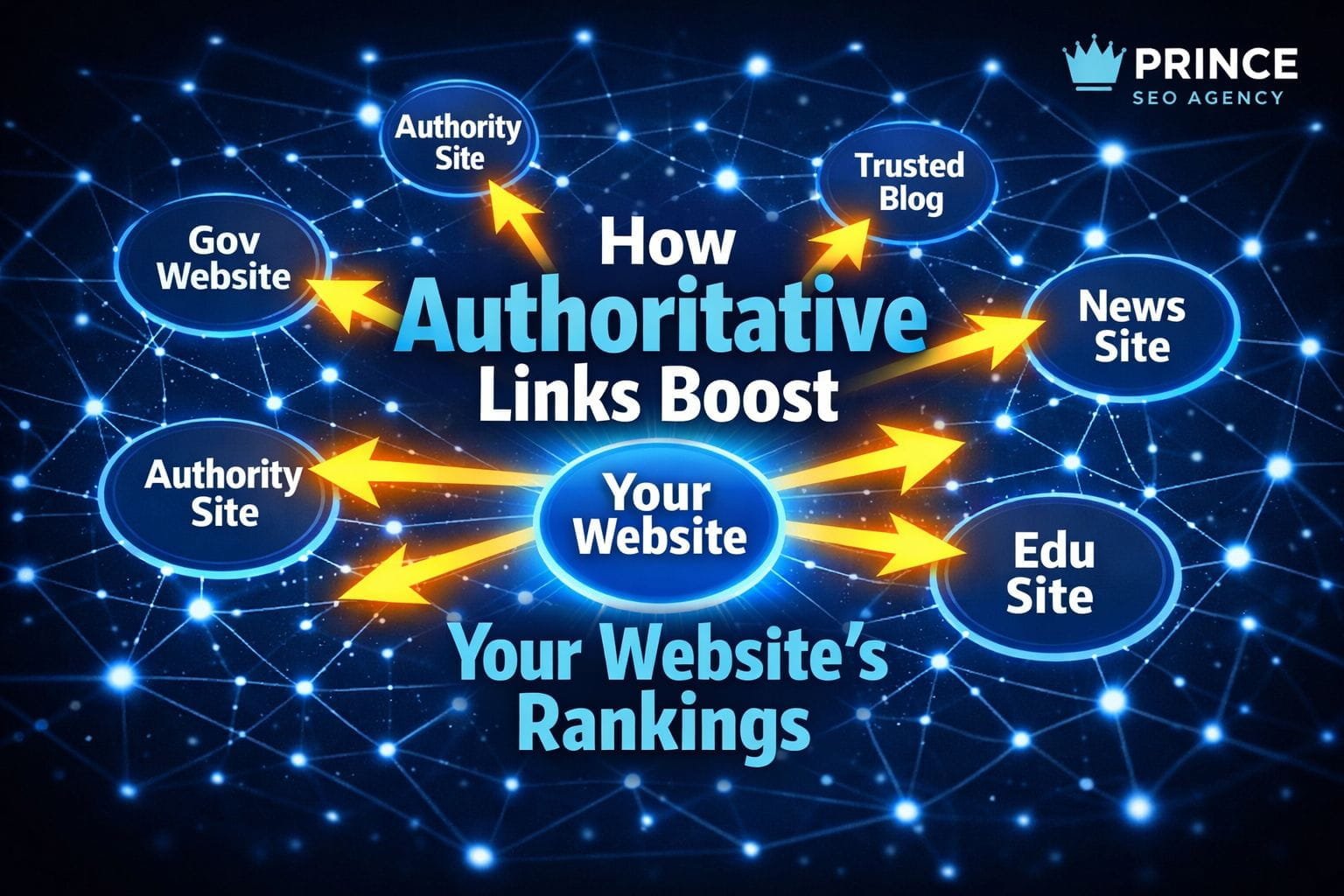
In 2026, link quality matters far more than link quantity. One backlink from a reputable industry website in your niche is worth more than fifty links from random blogs that have nothing to do with your topic.
From my backlink analysis work: The sites ranking in position one to three for competitive keywords consistently have backlinks from contextually relevant sources not just high-DA sites. Relevance has become a major trust signal.
What to do
Audit your existing backlink profile using tools like Ahrefs or Semrush. Identify any toxic or irrelevant links and disavow them if necessary. Then build a deliberate link acquisition strategy focus on digital PR, guest posts on relevant blogs, and earning mentions through genuinely useful content that journalists and bloggers want to reference.
4. Technical SEO Is Quietly Killing Your Rankings
Technical issues are invisible to most website owners. You can’t see them by reading your own site you have to actually look under the hood. And what I find in technical audits is almost always surprising to the client.
Common culprits I encounter: pages that aren’t being indexed because of a robots.txt misconfiguration, slow page speed that is pushing Core Web Vitals scores into the red, duplicate content created by URL parameters, internal linking structures that leave important pages orphaned, and mobile usability issues on pages that weren’t built with phones in mind.
Google has made it clear in its documentation that crawlability and indexability are prerequisites for ranking. If your page isn’t being indexed, nothing else matters.
One audit I did revealed a client’s entire blog was accidentally set to noindex a setting someone had turned on during development and never removed. They had spent six months writing content that Google couldn’t even read.
What to do
Run a technical audit using tools like Screaming Frog, Google Search Console, or Semrush’s site audit feature. Check your indexing status, Core Web Vitals, internal linking depth, duplicate content, and structured data. Fix critical issues first, then systematically work through the rest.
5. Google’s Helpful Content System Has Evaluated Your Site
Since Google rolled out its Helpful Content system and continued refining it into 2025 and 2026, a large number of websites have seen significant traffic drops not because of individual page quality, but because of a site-wide quality assessment.
Google’s system essentially evaluates whether your website exists primarily to help people or primarily to rank in search engines. Content that feels written for algorithms stuffed with keywords, thin on genuine insight, and lacking any real authorial perspective gets downgraded at a site-wide level.
This is where E-E-A-T (Experience, Expertise, Authoritativeness, Trustworthiness) becomes critical. Google wants to know who is writing the content, whether they have real experience in the subject, and whether the site as a whole demonstrates genuine knowledge.
The shift I’ve seen: sites with a clear author, a consistent editorial perspective, and content that demonstrates personal experience are recovering from and avoiding these algorithmic downgrades. Sites producing generic AI-assisted content without any human editorial layer continue to suffer.
What to do
Add real author pages with credentials and professional history. Write from personal experience where possible. Remove or significantly improve thin, low-value pages on your site. Make sure every article answers a question that a human actually wants answered not just a keyword that a tool suggested.
6. AI Search and AI Overviews Are Changing the Game
One thing I tell every client right now: Google’s AI Overviews are restructuring how traffic gets distributed. For informational queries, a growing percentage of searches now result in an AI-generated answer at the top of the page and users never click further.
This doesn’t mean SEO is dead. It means the strategy has to evolve. Ranking for broad informational keywords is becoming less valuable. Ranking for specific, intent-rich queries where the user needs to actually click through comparisons, product recommendations, local services, and complex how-to content is becoming more valuable.
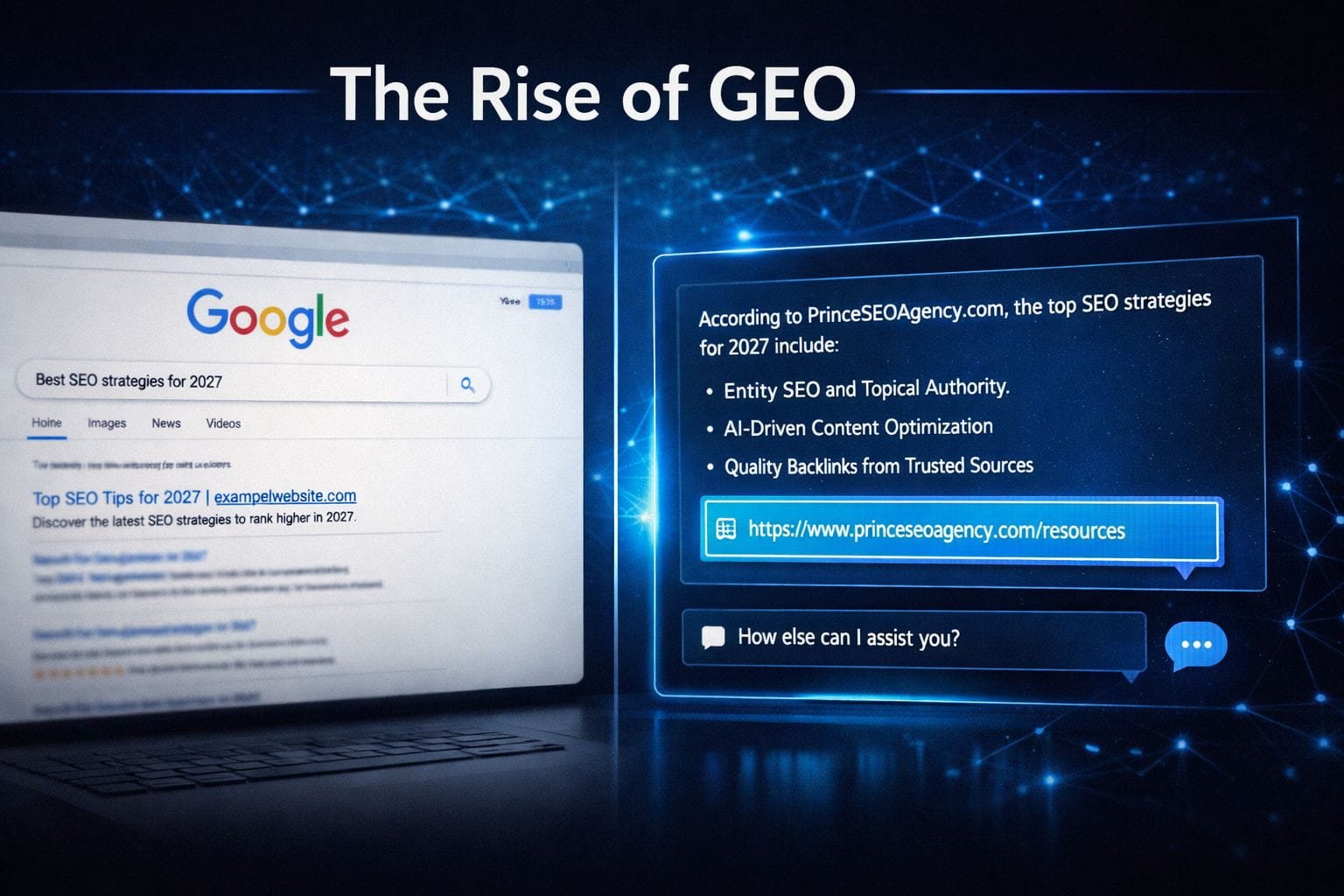
Additionally, your content needs to be optimized to be cited by AI Overviews, not just ranked by traditional algorithms. This is what some are calling Generative Engine Optimization, or GEO. The structural clarity, factual accuracy, and authoritative sourcing of your content now determines whether AI systems reference your site in their answers.
Strategy shift: Instead of only targeting high-volume informational keywords, focus on building content that demonstrates clear expertise, uses specific data and frameworks, and answers questions in a format that AI systems can easily reference and attribute.
What to do
Study which queries in your niche are already triggering AI Overviews. Shift content investment toward queries where human click-through still dominates commercial, transactional, and highly specific informational queries. Structure your content with clear headers, specific facts, and cite original research or data where possible.
What I See Differently on Page 1 vs Page 5
After reviewing hundreds of websites across different industries, certain patterns become very clear. Sites ranking on page one are not doing everything perfectly but they do a few things consistently better than their competitors.
Page one sites have content that matches intent precisely. They demonstrate genuine topical depth in their niche. They have at least some quality backlinks from relevant sources. Their technical foundations are solid fast, mobile-optimized, and properly indexed. And they signal real authorship and expertise on their pages.
Page five sites usually have one or more of these problems: content that is technically on-topic but misses what the user actually needs, a website that tries to cover too many topics without depth in any of them, zero backlinks or a spammy link profile, and technical issues that prevent Google from fully reading and evaluating their content.
The gap between page one and page five is rarely about one thing. It’s about a combination of factors and fixing all of them in a coordinated way is what produces real ranking improvements.
Common Mistakes I See Beginners Make
Targeting keywords that are too competitive too early is something almost every new website does. They want to rank for “SEO agency” when they should be building visibility with “SEO agency for e-commerce brands in Chandigarh” first.
Publishing content and waiting for rankings is another common trap. Publishing is step one. Building links, updating the content, and promoting it actively are steps two, three, and four which most people skip.
Changing the website too frequently is also a problem I see often. Every time you significantly change your URL structure, navigation, or page content, you risk disrupting whatever positive signals you’ve already built. Stability matters.
Finally, ignoring Google Search Console is a mistake that costs people months. GSC shows you exactly which queries you’re appearing for, where you’re losing clicks, and which pages have indexing issues. It’s free, accurate, and most people check it once and forget about it.
The Prince SEO Agency Framework for Fixing Rankings
Step 1 Technical Foundation Audit
Before touching content or links, ensure Google can fully crawl, index, and read your website. Fix Core Web Vitals, indexing errors, mobile issues, and internal linking gaps. This is the foundation everything else sits on.
Step 2 Intent Alignment Review
Go through your top target pages and evaluate each one against the search intent for its target keyword. Rewrite, restructure, or expand pages that don’t match what users are actually looking for when they search that query.
Step 3 Topical Authority Build
Map your content gaps. Identify every subtopic in your niche that you haven’t covered. Build a content calendar that systematically fills those gaps. Create strong internal linking between your pillar pages and supporting articles
Step 4 Backlink Acquisition
Build links through digital PR, expert contributions, and creating content that earns references naturally. Focus on relevance over volume. One solid editorial link from an industry publication beats fifty directory listings
Step 5 E-E-A-T Signals
Add or improve author pages. Include original observations, data, frameworks, or experiences in your content. Make it clear who is behind the content and why they are qualified to write about it.
Step 6 AI Search Optimization (GEO)
Restructure content for AI citation clear headers, factual specificity, original frameworks, and well-sourced claims. Monitor which queries are generating AI Overviews and adjust your content targeting accordingly.
Practical Action Plan
Today
Open Google Search Console and check for indexing errors. Look at your most important pages and verify they are indexed and generating impressions. Note any pages with high impressions but low click-through rates these are optimization opportunities
This Week
Pick your three most important target keywords and manually search each one. Study the top results. Compare them to your own page. Identify the gap between what Google is ranking and what you’ve produced. Then start rewriting or expanding to close that gap
This Month
Run a technical audit with a tool like Screaming Frog or Semrush. Map your content gaps and create a content plan. Begin outreach for one or two backlink opportunities in your industry. Set up monthly reporting so you can track progress
Long-Term
Build your topical authority systematically. Invest in digital PR and content that earns organic links. Stay current with how AI search is evolving and adapt your content strategy to optimize for AI citation, not just traditional ranking
Implementation Checklist
A practical SEO action plan to improve rankings, strengthen authority, and prepare for AI-driven search in 2026.
The Future of SEO in 2026 and Beyond
The core of SEO has not changed Google still wants to surface the most helpful, trustworthy, and authoritative content for each query. What has changed is the sophistication of how it evaluates those qualities, and the new interface layer of AI Overviews that sits above traditional rankings
Content strategy is shifting from volume to depth. A website with twenty genuinely excellent, well-researched articles will now outperform a website with two hundred thin, keyword-optimized posts. The era of producing content at industrial scale for ranking purposes is effectively over for most niches
The websites that will win in 2026 and beyond are those that build real authority through consistent publishing, genuine expertise, strategic backlinks, and a content experience that actually serves the reader. That’s not a new idea. But the tools Google is using to identify and reward that authority have become significantly more precise
For businesses in India especially, there is a huge opportunity. Most local markets are still under-served by genuinely authoritative content. The gap between what exists and what Google would ideally rank is wide and that gap is your opportunity
Frequently Asked Questions
How long does it take for a website to start ranking on Google?
There’s no fixed timeline. New websites with no authority typically take 6 to 12 months to see meaningful rankings for competitive keywords. Established sites fixing specific issues can see improvements in 4 to 8 weeks. Consistency and compounding effort over time drives results.
Can I rank without backlinks?
Yes, for low-competition keywords especially local or long-tail queries. But for any moderately competitive keyword, backlinks from relevant sources remain one of the strongest ranking factors. Content alone rarely wins in competitive spaces.
How many words should an article be to rank well?
Word count is not a direct ranking factor. What matters is whether the content fully satisfies the user’s search intent. Some queries are served best by 800 words. Others require 3,000. Study what’s already ranking and match the depth of the top results.
Does publishing new content regularly help rankings?
Consistency helps build topical authority and keeps your site fresh, but frequency alone is not a ranking factor. One excellent, well-researched article per week is far more effective than five thin posts per day.
What is E-E-A-T and why does it matter?
E-E-A-T stands for Experience, Expertise, Authoritativeness, and Trustworthiness. Google uses these signals to evaluate whether your content comes from a credible source. Demonstrating real experience in your topic — through author credentials, personal observations, and accurate information — directly improves how Google perceives your content.
Is SEO still worth it with AI Overviews taking traffic?
Absolutely. AI Overviews primarily affect broad informational queries. Commercial, transactional, and specific queries still drive significant click-through traffic. Additionally, ranking well in traditional results often correlates with being cited in AI Overviews so strong SEO and GEO reinforce each other
What is the most important technical SEO issue to fix first?
Indexing. If your pages aren’t indexed, nothing else matters. Use Google Search Console to verify your important pages are being indexed, then work on speed, mobile-friendliness, and structured data.
How do I know if my content matches search intent?
Search your target keyword and study the top five results. What format are they using blog post, comparison, how-to guide, product page? How deep is the content? What specific questions do they answer? Your content should align with and ideally improve on what’s already ranking.
What tools do you recommend for diagnosing ranking problems?
Google Search Console (free, essential), Ahrefs or Semrush for keyword and backlink analysis, Screaming Frog for technical crawl audits, and PageSpeed Insights for Core Web Vitals. Start with Search Console it gives you the most accurate data about your specific site’s performance.
What is topical authority and how do I build it?
Topical authority is Google’s assessment of whether your website comprehensively covers a particular subject. You build it by creating a dense cluster of well-researched content around your core topic pillar pages supported by detailed articles covering every related subtopic, all linked together thoughtfully.
How does site speed affect rankings?
Site speed, particularly Core Web Vitals metrics like Largest Contentful Paint (LCP) and Cumulative Layout Shift (CLS), is a confirmed Google ranking signal. Beyond the ranking impact, slow sites have higher bounce rates, which means less engagement data for Google to use as a positive signal.
Should I use AI to write my SEO content?
AI tools can help with research, outlines, and drafting. But content that goes live should reflect genuine human expertise, personal experience, and editorial judgment. Google’s Helpful Content system is specifically designed to identify and downgrade content that feels generated for algorithms rather than written for people
Related Resources from Prince SEO Agency
Learn how Prince SEO Agency approaches custom SEO strategies for businesses and builds long-term ranking growth.
A deep dive into modern link-building strategies, real backlink patterns, and what actually works in 2026.
Understand how AI search is changing SEO and how to optimize your content for AI-powered search results.
Trusted Resources
The following sources helped shape the insights shared in this article.
Official documentation from Google on how search works, indexing, and ranking systems.
Deep insights into SEO strategies, backlink analysis, and real-world ranking data.
Technical SEO, keyword research strategies, and competitive analysis frameworks.
Foundational SEO knowledge including E-E-A-T, authority signals, and ranking principles.
Proven link-building techniques, ranking factors, and data-backed SEO experiments.
Latest SEO updates, AI search trends, and Google algorithm insights.
About the Author
Prince Chawla
Founder, Prince SEO Agency | India’s AI SEO Expert
Prince Chawla is the founder of Prince SEO Agency and writes about SEO, AI search, topical authority, backlinks, and modern ranking strategies. He focuses on practical, experience-based SEO that helps businesses improve visibility on Google and adapt to how search is evolving in 2026.
His work is centered around real website audits, search intent analysis, content structuring, link building, and AI-driven search optimization. Instead of generic advice, Prince shares straightforward insights based on what he observes in ranking and non-ranking websites across different industries.
Through Prince SEO Agency, he helps brands build stronger topical authority, improve organic rankings, and create content that is useful for both traditional Google search and AI-powered search experiences.